Circus cyaneus · kaňa sivá · Hen Harrier
Alternative and historical names
Slovak names
- kaňa sivá (Kovalik 2010)
- kaňa sivá (Matoušek 1990)
- kaňa sivá (Ferianc 1987)
English names
- Northern Harrier (IOC 2.5 2010)
- Hen-Harrier (BOU 1923)
Scientific names
- Circus cyaneus (AviList 2026)
- Circus cyaneus (IOC 15.2 2026)
- Circus cyaneus (IOC 2.5 2010)
- Circus cyaneus (BOU 1923)
Taxonomic synonyms
- Falco cyaneus (Linnaeus, 1766)
- Circus cyaneus (Linnaeus, 1766)
Birding Slovakia database
This species through our community’s eyes
Species characteristics in Slovakia
- Migration
- common transmigrant / Tc
- Wintering
- common wintering / Wc
- Rarities committee:
- Does not require any reporting or registration by Raritties commitee
Observation map

Detailed species observation statistics

Source: the Birding.sk database. Counts reflect observer contributions, not population size.
About this species
Distribution
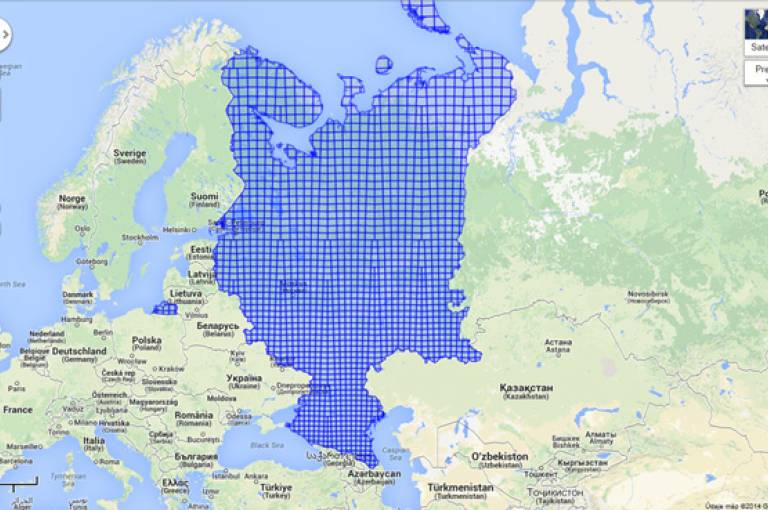
Hen Harrier breeds in northern and temperate Eurasia. Some populations migrate south while others remain in milder areas. In Slovakia it is a regular passage and winter visitor to open country, mainly from autumn to spring. It is not a regular breeder; spring sightings should not automatically be interpreted as local nesting. Numbers vary with weather and food.
Habitat
It favours fields, meadows, fallows and low-growing wetlands. Night roosts may gather in taller grass or other safe cover. Slovak birds often quarter extensive farmland close to the ground.
Breeding
In its breeding range it builds a ground nest among vegetation. The female incubates several white eggs while the male supplies food. This concerns populations outside its normal Slovak occurrence.
Food
It mainly catches small mammals and birds, flying slowly over terrain before dropping abruptly onto prey.
Interesting fact
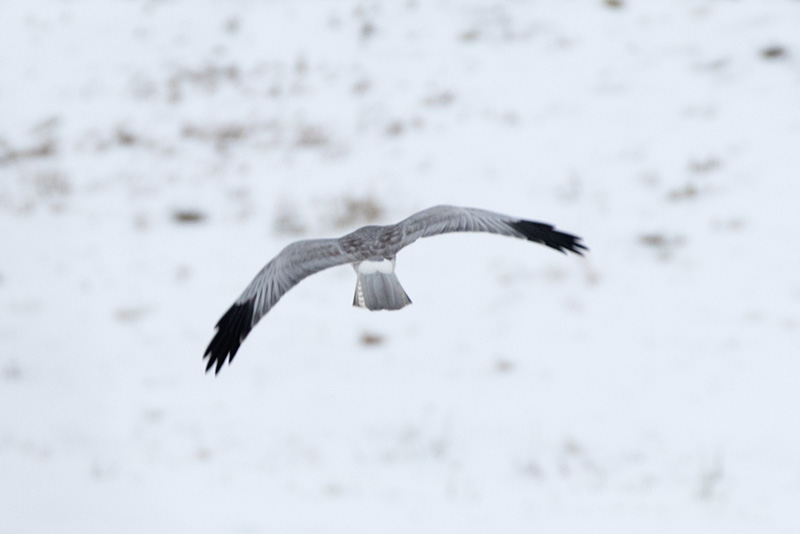
Males are grey with black wingtips; females and young are brown with a striking white rump. The North American relative is now generally treated as a separate species.
Sources: Slovak Wikipedia · English Wikipedia · Raptor Protection of Slovakia: winter census 2026
Sign in to send private feedback on the text to our editors.
Explore further
Overview and identification
Descriptions, identification and names.
- Slovak Wikipedia ↗
Taxon account in Slovak: distribution, biology and references for further reading.
https://sk.wikipedia.org/wiki/Ka%C5%88a_siv%C3%A1 - English Wikipedia ↗
Taxon account in English: distribution, biology and taxonomic context.
https://en.wikipedia.org/wiki/Hen_harrier - Raptor Protection of Slovakia: winter census 2026 ↗
Results of the 2026 winter raptor census in the Pannonian region.
https://www.dravce.sk/web/index.php/sk/aktuality-2026/1852-vysledky-zimneho-scitania-dravych-vtakov-v-panonskom-regione-2026 - BTO: Identifying grey harriers - Hen Harrier, Montagu's Harrier and Pallid Harrier ↗
English identification video comparing this taxon with similar species and explaining distinguishing features.
https://www.bto.org/learn/skills/bird-identification/videos/harriers