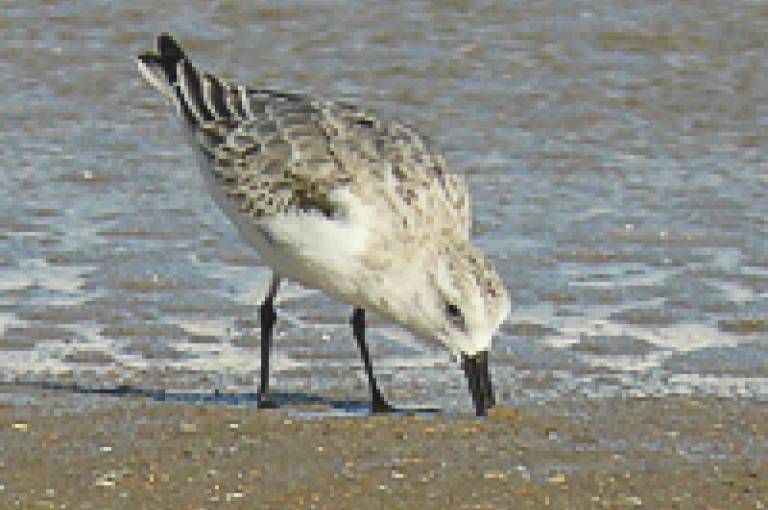
Calidris temminckii · pobrežník sivý · Temminck's Stint
Alternative and historical names
Slovak names
- pobrežník sivý (Kovalik 2010)
- pobrežník Temminckov (Kovalik 2010)
- pobrežník sivý (Matoušek 1990)
English names
- Temminck's Stint (IOC 2.5 2010)
- Temminck’s Stint (BOU 1923)
Scientific names
- Calidris temminckii (AviList 2026)
- Calidris temminckii (IOC 15.2 2026)
- Calidris temminckii (IOC 2.5 2010)
- Erolia temminckii (BOU 1923)
Taxonomic synonyms
- Erolia temminckii (Leisler, 1812)
- Tringa spec (Leisler, 1812)
- Tringa temminckii (Leisler, 1812)
- Calidris temminckii (Leisler, 1812)
Birding Slovakia database
This species through our community’s eyes
Photographs by category
Species characteristics in Slovakia
- Migration
- uncommon transmigrant / Tu
- Rarities committee:
- Does not require any reporting or registration by Raritties commitee
Observation map

Detailed species observation statistics

Source: the Birding.sk database. Counts reflect observer contributions, not population size.
About this species
Distribution
Temminck’s Stint breeds in northern Europe and Asia and winters at freshwater wetlands in Africa and southern Asia. In Slovakia it is a regular but scarce migrant during spring and return passage. It usually occurs singly or in small groups. It does not breed here and is not expected regularly in winter.
Habitat
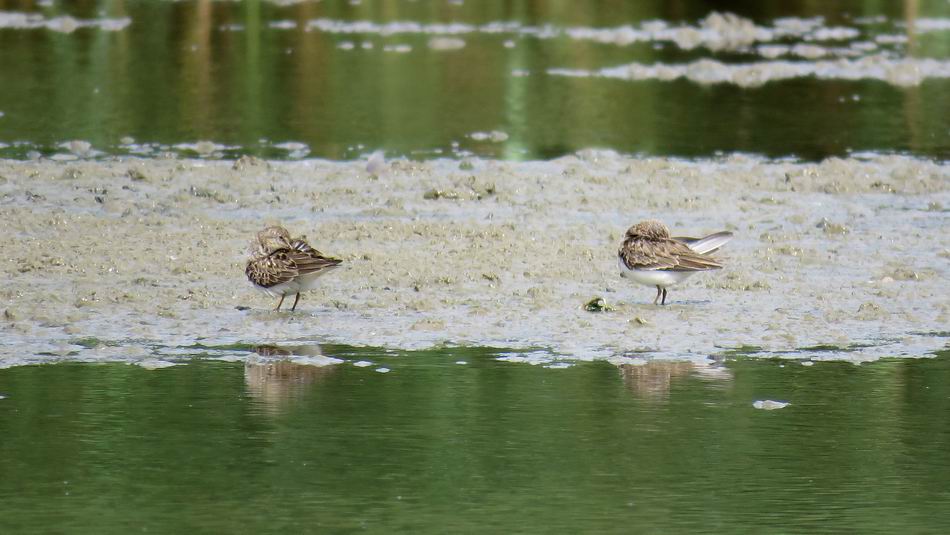
In the north it breeds beside marshes and wet margins. In Slovakia it favours shallow muddy patches, often with scattered low vegetation beside fishponds and flood pools. It can be less conspicuous than Little Stint and may remain closer to vegetated edges.
Breeding
In northern taiga and tundra it nests in a scrape among low plants. A clutch usually contains four eggs and is tended by one parent. Chicks soon leave and capture small food items independently.
Food
It mainly catches insects and small invertebrates in soft mud among low plants. Along margins it creeps slowly and low rather than running rapidly like some other small sandpipers.
Interesting fact
A female may leave her first clutch with a male and incubate a later clutch herself after mating with another partner. Parental care therefore need not involve one stable pair attending one nest.
Sources: Slovak Wikipedia · English Wikipedia
Sign in to send private feedback on the text to our editors.
Explore further
Overview and identification
Descriptions, identification and names.
- Slovak Wikipedia ↗
Taxon account in Slovak: distribution, biology and references for further reading.
https://sk.wikipedia.org/wiki/Pobre%C5%BEn%C3%ADk_siv%C3%BD_(Calidris_temminckii) - English Wikipedia ↗
Taxon account in English: distribution, biology and taxonomic context.
https://en.wikipedia.org/wiki/Temminck%27s_stint