Picus viridis · žlna zelená · European Green Woodpecker
Alternative and historical names
Slovak names
- žlna zelená (Kovalik 2010)
- žlna zelená (Matoušek 1990)
English names
- European Green Woodpecker (IOC 2.5 2010)
- Green Woodpecker (BOU 1923)
Scientific names
- Picus viridis (AviList 2026)
- Picus viridis (IOC 15.2 2026)
- Picus viridis (IOC 2.5 2010)
- Picus viridis (BOU 1923)
Taxonomic synonyms
- Picus viridis Linnaeus, 1758

Birding Slovakia database
This species through our community’s eyes
Species characteristics in Slovakia
- General occurrence
- resident / R
- Breeding
- common nidificant / Nc
- Wintering
- common wintering / Wc
- Rarities committee:
- Does not require any reporting or registration by Raritties commitee
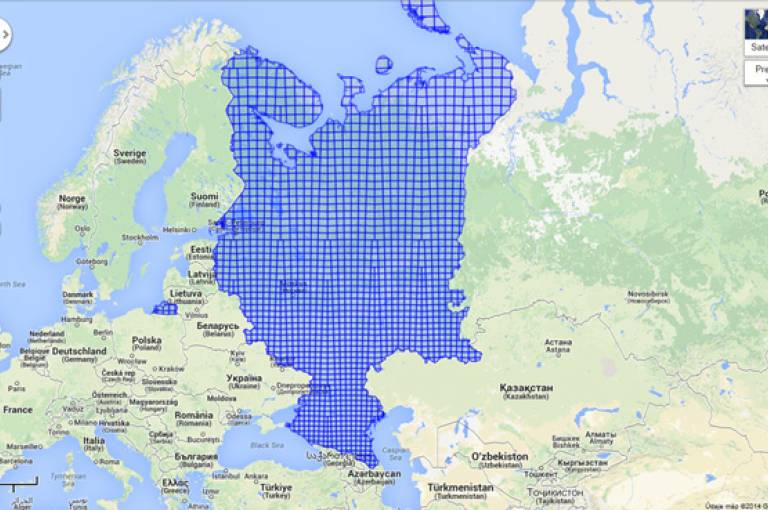
Observation map

Detailed species observation statistics

Source: the Birding.sk database. Counts reflect observer contributions, not population size.
About this species
Distribution
It occurs across much of Europe and into western Asia, with a closely related species replacing it on the Iberian Peninsula. In Slovakia it is a widespread resident breeder, especially in lowlands and hills, but scarce at higher elevations. It does not undertake regular long-distance migration, making mainly local movements outside the breeding season.
Habitat
Typical places include orchards, parks, village edges and grassland with old trees. It prefers a varied landscape with short grass and ant nests to continuous dark forest. It is often seen on a lawn rather than on a tree trunk.
Breeding
It excavates a nest cavity in a tree in an orchard, park or open woodland. The female usually lays 5–7 white eggs; both parents incubate and feed the chicks. The young continue receiving food for a time after leaving the cavity.
Food
It specialises in ants, extracting adults, larvae and pupae from the ground and their nests with a long sticky tongue. Other insects play a smaller part in its diet.
Interesting fact
Its conspicuous laughing call is a more useful clue than drumming, which is relatively infrequent. This vocal woodpecker can announce its presence from far away despite behaving cautiously around people.
Sources: Slovak Wikipedia · English Wikipedia
Sign in to send private feedback on the text to our editors.
Explore further
Overview and identification
Descriptions, identification and names.
- Slovak Wikipedia ↗
Taxon account in Slovak: distribution, biology and references for further reading.
https://sk.wikipedia.org/wiki/%C5%BDlna_zelen%C3%A1 - English Wikipedia ↗
Taxon account in English: distribution, biology and taxonomic context.
https://en.wikipedia.org/wiki/European_green_woodpecker - Bird.watching.sk: identification and voice – Picus viridis ↗
Slovak species lesson describing appearance, voice and habitat, supporting field identification.
https://bird.watching.sk/sk/zlna-zelena-picus-viridis/