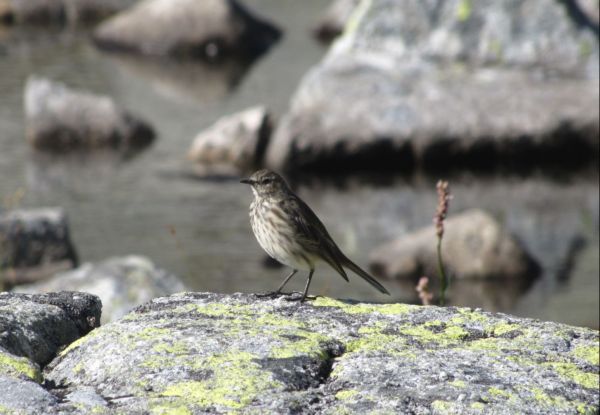
Anthus spinoletta · ľabtuška vrchovská · Water Pipit
Alternative and historical names
Slovak names
- ľabtuška vrchovská (Kovalik 2010)
- ľabtuška horská (Kovalik 2010)
- ľaptuška vrchovská (Kovalik 2010)
- ľabtuška vrchovská (Matoušek 1990)
English names
- Water Pipit (IOC 2.5 2010)
- Water-Pipit (BOU 1923)
Scientific names
- Anthus spinoletta (AviList 2026)
- Anthus spinoletta (IOC 15.2 2026)
- Anthus spinoletta (IOC 2.5 2010)
- Anthus spinoletta (BOU 1923)
Taxonomic synonyms
- Alauda spec (Linnaeus, 1758)
- Alauda spinoletta (Linnaeus, 1758)
- Anthus spinoletta (Linnaeus, 1758)
Birding Slovakia database
This species through our community’s eyes
Species characteristics in Slovakia
- General occurrence
- migrant / M
- Breeding
- common nidificant / Nc
- Migration
- common transmigrant / Tc
- Wintering
- uncommon wintering / Wu
- Rarities committee:
- Does not require any reporting or registration by Raritties commitee
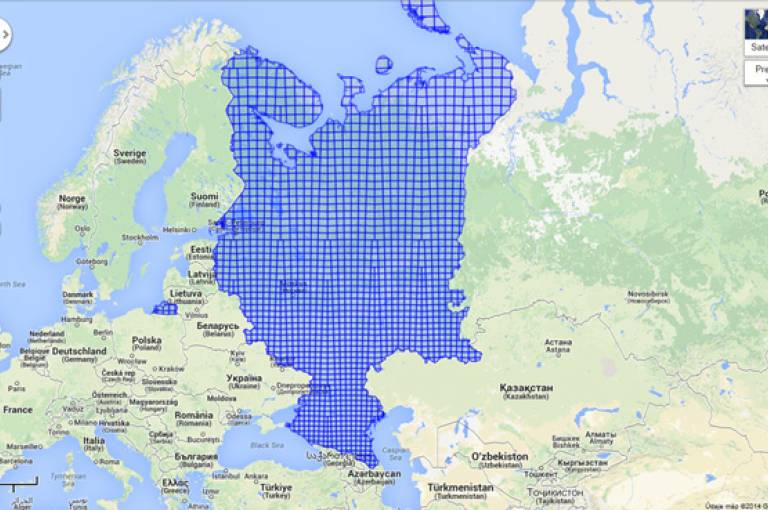
Observation map

Detailed species observation statistics

Source: the Birding.sk database. Counts reflect observer contributions, not population size.
About this species
Distribution
The species in its current sense inhabits mountains of southern and central Europe and Asia east to China. In Slovakia it breeds mainly above the tree line and can be locally common in suitable alpine grassland. In autumn it descends or migrates. In winter it is an uncommon visitor to lowland wetlands and open shores.
Habitat
In summer look on mountain grasslands, grassy slopes and near snowfields. Outside the breeding season its setting changes markedly: it uses muddy shores, wet meadows and exposed beds. A winter bird beside water is therefore in a perfectly natural habitat.
Breeding
The cup nest is hidden on the ground beneath vegetation or in a sheltered rock recess. The female usually lays 4–6 spotted eggs. Parents feed chicks with invertebrates from mountain grassland; lowland winter stopovers therefore differ from summer breeding habitat.
Food
Small invertebrates are picked from soil and low plants. Summer birds search mountain turf and winter birds wet shores, using similar feeding methods despite the different surroundings. Some plant food is also taken.
Interesting fact
The seasonal move from mountain meadow to lowland wet shore is accompanied by a change in appearance. The lightly marked, pinkish spring breast gives way to more obvious winter streaking, making the same species look rather different.
Sources: Slovak Wikipedia · English Wikipedia
Sign in to send private feedback on the text to our editors.
Explore further
Overview and identification
Descriptions, identification and names.
- Slovak Wikipedia ↗
Taxon account in Slovak: distribution, biology and references for further reading.
https://sk.wikipedia.org/wiki/%C4%BDabtu%C5%A1ka_vrchovsk%C3%A1 - English Wikipedia ↗
Taxon account in English: distribution, biology and taxonomic context.
https://en.wikipedia.org/wiki/Water_pipit
Sounds, photographs and video
Recordings and visual comparisons.
- BTO: identifying Water, Rock and Meadow Pipits ↗
English comparative identification video covering appearance and vocalisations.
https://www.bto.org/learn/skills/bird-identification/videos/water-pipit-and-rock-pipit