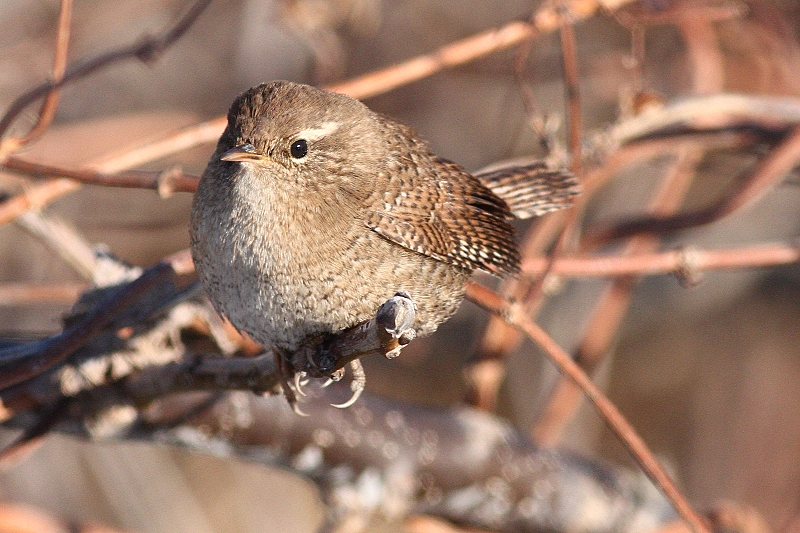
Nannus troglodytes · oriešok obyčajný · Eurasian Wren
Alternative and historical names
Slovak names
- oriešok obyčajný (Kovalik 2010)
- oriešok hnedý (Kovalik 2010)
- oriešok hnedý (Matoušek 1990)
English names
- Eurasian Wren (IOC 2.5 2010)
- Wren (BOU 1923)
Scientific names
- Nannus troglodytes (AviList 2026)
- Troglodytes troglodytes (IOC 15.2 2026)
- Troglodytes troglodytes (IOC 2.5 2010)
- Troglodytes troglodytes (BOU 1923)
Taxonomic synonyms
- Motacilla troglodytes (Linnaeus, 1758)
- Troglodytes troglodytes (Linnaeus, 1758)
Birding Slovakia database
This species through our community’s eyes
Species characteristics in Slovakia
- General occurrence
- some are resident, some are migratory / R+M
- Breeding
- common nidificant / Nc
- Migration
- common transmigrant / Tc
- Wintering
- common wintering / Wc
- Rarities committee:
- Does not require any reporting or registration by Raritties commitee
Observation map

Detailed species observation statistics

Source: the Birding.sk database. Counts reflect observer contributions, not population size.
About this species
Distribution
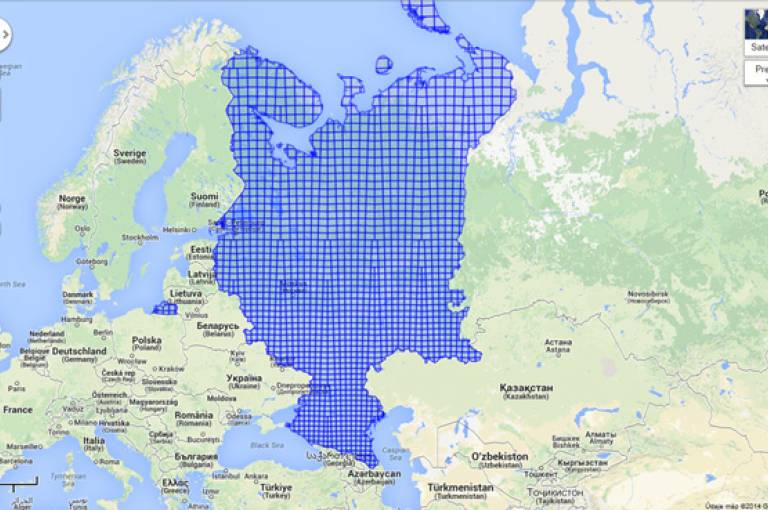
Its range stretches from North Africa through Europe to eastern Asia. In Slovakia it is a common breeder from lowlands to the dwarf-pine zone. Some birds remain while others migrate or wander, and northern birds also arrive in winter. It can be seen year-round, although harsh winters are demanding for such a small insect-eater.
Habitat
It favours dense undergrowth, tangled roots, fallen trees, brush piles and riverside vegetation. Moving close to the ground through dark recesses, it is often heard before being seen. A structurally varied overgrown garden corner is more useful than an open lawn alone.
Breeding
The male prepares several rounded nests with side entrances; the female finishes and lines the chosen one. She usually lays 5–6 eggs. The nest is concealed among roots, branches or another sheltered recess.
Food
It searches crevices, leaf litter and timber for small insects, their immature stages and spiders. Its small bill allows it to probe places larger birds pass over.
Interesting fact
Its explosive, ringing song is surprisingly powerful for its tiny body. When the singer finally appears, it often looks like a small brown ball with a short cocked tail.
Sources: Slovak Wikipedia · English Wikipedia
Sign in to send private feedback on the text to our editors.
Explore further
Overview and identification
Descriptions, identification and names.
- Slovak Wikipedia ↗
Taxon account in Slovak: distribution, biology and references for further reading.
https://sk.wikipedia.org/wiki/Orie%C5%A1ok_oby%C4%8Dajn%C3%BD - English Wikipedia ↗
Taxon account in English: distribution, biology and taxonomic context.
https://en.wikipedia.org/wiki/Eurasian_wren