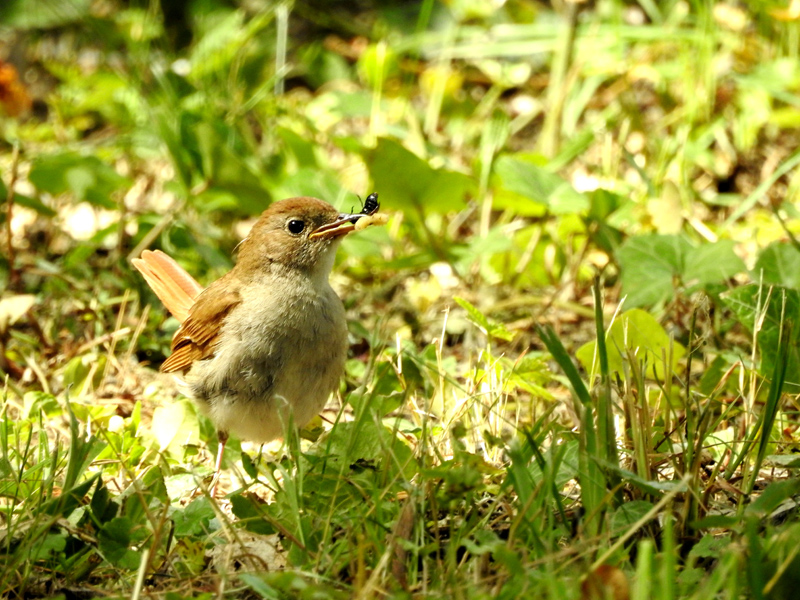
Luscinia megarhynchos · slávik obyčajný · Common Nightingale
Alternative and historical names
Slovak names
- slávik obyčajný (Kovalik 2010)
- slávik krovinový (Kovalik 2010)
- slávik lesný (Kovalik 2010)
- slávik krovinový (Matoušek 1990)
English names
- Common Nightingale (IOC 2.5 2010)
- Common Nightingale (BOU 1923)
Scientific names
- Luscinia megarhynchos (AviList 2026)
- Luscinia megarhynchos (IOC 15.2 2026)
- Luscinia megarhynchos (IOC 2.5 2010)
- Luscinia megarhynchos (BOU 1923)
Taxonomic synonyms
- Luscinia megarhynchos corsa (Parrot, 1910)
- Erithacus megarhynchos (Brehm, 1831)
- Luscinia megarhynchos Brehm, CL, 1831
Birding Slovakia database
This species through our community’s eyes
Photographs by category
Species characteristics in Slovakia
- General occurrence
- migrant / M
- Breeding
- common nidificant / Nc
- Migration
- common transmigrant / Tc
- Rarities committee:
- Does not require any reporting or registration by Raritties commitee
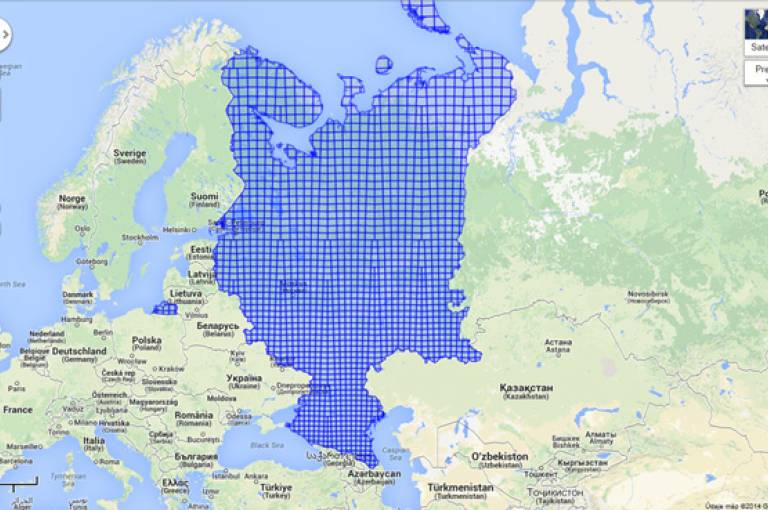
Observation map

Detailed species observation statistics

Source: the Birding.sk database. Counts reflect observer contributions, not population size.
About this species
Distribution
It breeds in warmer parts of Europe, northwestern Africa and western to central Asia, wintering in sub-Saharan Africa. In Slovakia it is a regular, locally common summer breeder in lowlands and basins. It does not extend into mountain forests like many other songbirds. Arrival is in April and departure in late summer; it does not normally winter here.
Habitat
Typical habitats are dense scrub, overgrown woodland edges, riverside vegetation and farmland copses with rich undergrowth. It needs cover at ground level and leaf litter for feeding. It can live near towns or villages where enough quiet, overgrown space remains.
Breeding
The nest lies on or close to the ground beneath dense cover, often among leaf litter, with a plant-material cup and fine lining. The female usually lays 4–5 eggs. Parents feed the young, whose movements remain concealed in the lower vegetation.
Food
It takes insects, larvae, spiders and other invertebrates, mainly from the ground beneath scrub. Berries supplement the diet in late summer. The singer on a high branch therefore obtains much of its food at a lower level.
Interesting fact
A nightingale does not sing only at night. Nocturnal song is especially conspicuous in males seeking a mate, but powerful phrases are also heard by day. Its plain brown plumage contrasts sharply with its rich vocal performance.
Sources: Slovak Wikipedia · English Wikipedia
Sign in to send private feedback on the text to our editors.
Explore further
Overview and identification
Descriptions, identification and names.
- Slovak Wikipedia ↗
Taxon account in Slovak: distribution, biology and references for further reading.
https://sk.wikipedia.org/wiki/Sl%C3%A1vik_oby%C4%8Dajn%C3%BD - English Wikipedia ↗
Taxon account in English: distribution, biology and taxonomic context.
https://en.wikipedia.org/wiki/Common_nightingale - Bird.watching: Common Nightingale – identification and voice ↗
Slovak species lesson with identification features and an example vocalisation.
https://bird.watching.sk/sk/slavik-obycajny-luscinia-megarhynchos/
Sounds, photographs and video
Recordings and visual comparisons.
- BTO: identifying Nightingale and other night singers ↗
English comparative identification video covering appearance and vocalisations.
https://www.bto.org/learn/skills/bird-identification/videos/nightingale-and-other-night-singers