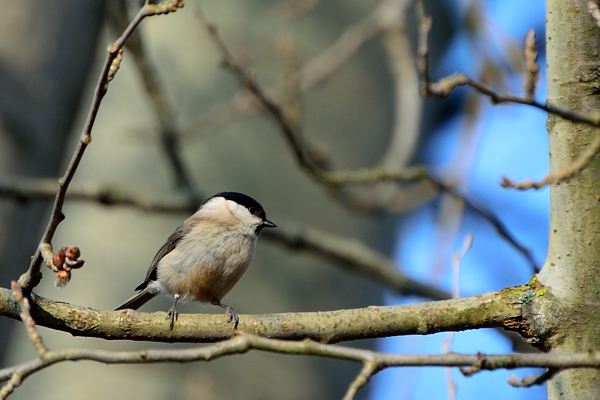
Poecile palustris · sýkorka hôrna · Marsh Tit
Alternative and historical names
Slovak names
- sýkorka hôrna (Kovalik 2010)
- sýkorka lesklohlavá (Kovalik 2010)
- sýkorka lesklohlavá (Matoušek 1990)
English names
- Marsh Tit (IOC 2.5 2010)
- Marsh-Titmouse (BOU 1923)
Scientific names
- Poecile palustris (AviList 2026)
- Poecile palustris (IOC 15.2 2026)
- Poecile palustris (IOC 2.5 2010)
- Parus palustris (BOU 1923)
Taxonomic synonyms
- Parus palustris darti (Jouard, 1927)
- Parus dresseri longirostris (Kleinschmidt, 1897)
- Parus palustris longirostris (Kleinschmidt, 1897)
- Parus palustris (Linnaeus, 1758)
- Poecile palustris (Linnaeus, 1758)
Birding Slovakia database
This species through our community’s eyes
Species characteristics in Slovakia
- General occurrence
- resident / R
- Breeding
- common nidificant / Nc
- Wintering
- common wintering / Wc
- Rarities committee:
- Does not require any reporting or registration by Raritties commitee
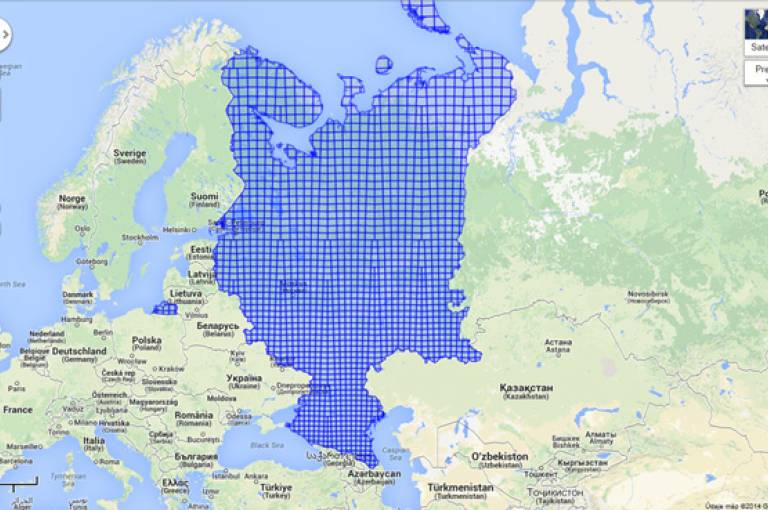
Observation map

Detailed species observation statistics

Source: the Birding.sk database. Counts reflect observer contributions, not population size.
About this species
Distribution
It inhabits temperate woodland in Europe and, separately, eastern Asia. In Slovakia it is a regular resident breeder, mainly in deciduous and mixed vegetation from lowlands to foothills. It does not make regular long-distance migrations; winter birds are often local or making short movements. Mixed tit flocks usually contain fewer Marsh Tits than Great or Blue Tits.
Habitat
It favours mature deciduous woods with undergrowth, floodplain forests, edges and some larger gardens or parks. Cavities and varied vegetation matter. Despite its English name it is not restricted to marshes.
Breeding
It uses an existing tree cavity, sometimes enlarging it rather than excavating an entire hole. Moss and hair form the lining. A typical clutch contains 7–9 eggs; the female incubates and both parents feed the chicks. A second brood is not obligatory.
Food
It takes small insects and other invertebrates, adding seeds outside summer. Feeding takes place in crowns and undergrowth, and suitable feeders may be visited.
Interesting fact
Differences from Willow Tit are subtle, with voice particularly valuable. Cap gloss and bib size depend partly on viewing angle and light, so one feature in a poor photograph is often insufficient.
Sources: Slovak Wikipedia · English Wikipedia · BTO BirdFacts
Sign in to send private feedback on the text to our editors.
Explore further
Overview and identification
Descriptions, identification and names.
- Slovak Wikipedia ↗
Taxon account in Slovak: distribution, biology and references for further reading.
https://sk.wikipedia.org/wiki/S%C3%BDkorka_h%C3%B4rna - English Wikipedia ↗
Taxon account in English: distribution, biology and taxonomic context.
https://en.wikipedia.org/wiki/Marsh_tit - BTO BirdFacts ↗
Biology and identification in English; population figures and trends refer to Britain.
https://www.bto.org/learn/about-birds/birdfacts/marsh-tit - Bird.watching: Marsh Tit – identification and voice ↗
Slovak species lesson with identification features and an example vocalisation.
https://bird.watching.sk/sk/sykorka-horna-poecile-palustris/
Sounds, photographs and video
Recordings and visual comparisons.
- BTO: identifying Marsh Tit and Willow Tit ↗
English comparative identification video covering appearance and vocalisations.
https://www.bto.org/learn/skills/bird-identification/videos/marsh-and-willow-tits
Data and research
Occurrences, distribution and research.
- Vtáčia hodinka: Marsh and Willow Tit ↗
Slovak comparative article, advanced identification section.
https://vtaciahodinka.sk/urcovanie-druhov/