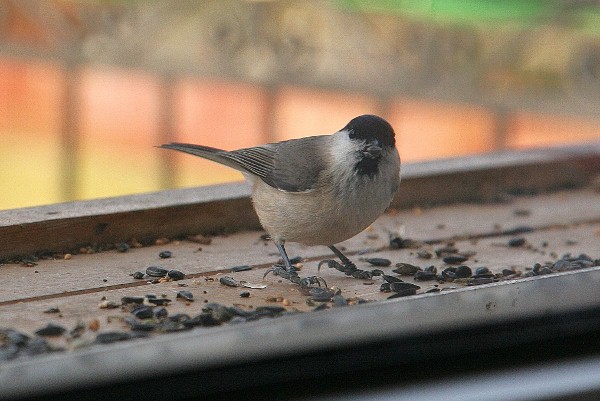
Poecile montanus · sýkorka čiernohlavá · Willow Tit
Alternative and historical names
Slovak names
- sýkorka čiernohlavá (Kovalik 2010)
- sýkorka černohlavá (Kovalik 2010)
- sýkorka čiernohlavá (Matoušek 1990)
English names
- Willow Tit (IOC 2.5 2010)
- Willow-Titmouse (BOU 1923)
Scientific names
- Poecile montanus (AviList 2026)
- Poecile montanus (IOC 15.2 2026)
- Poecile montanus (IOC 2.5 2010)
- Parus atricapillus (BOU 1923)
Taxonomic synonyms
- Parus cinereus montanus (Conrad von Baldenstein, 1827)
- Poecile montanus (Conrad von Baldenstein, 1827)
Birding Slovakia database
This species through our community’s eyes
Species characteristics in Slovakia
- General occurrence
- resident / R
- Breeding
- common nidificant / Nc
- Wintering
- common wintering / Wc
- Rarities committee:
- Does not require any reporting or registration by Raritties commitee
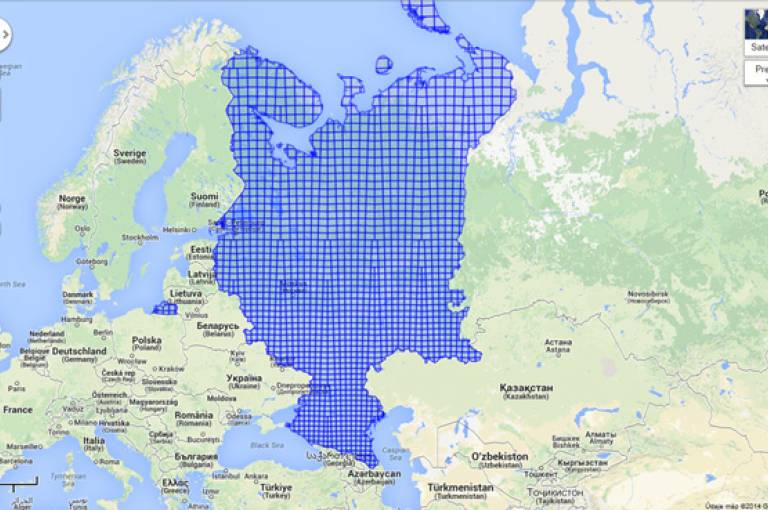
Observation map

Detailed species observation statistics

Source: the Birding.sk database. Counts reflect observer contributions, not population size.
About this species
Distribution
It occurs across temperate and northern Eurasia. In Slovakia it is a resident woodland breeder, chiefly in mountain and foothill regions with suitable dead wood. Most birds do not migrate far. Outside nesting it may join mixed tit flocks and move lower in search of food, without becoming a regular distant winter visitor.
Habitat
It uses coniferous and mixed forests, locally damp young growth and waterside vegetation. Rotten trunks and stumps suitable for cavities are important. In mountains it can be heard in sparse woods near the treeline.
Breeding
Unlike Marsh Tit, it often excavates its own hole in soft dead wood and lines the nest with fine material. A typical clutch contains 6–9 eggs. The female incubates and both parents feed the chicks, usually raising one brood.
Food
It eats insects, larvae and other invertebrates, together with seeds in colder months, collecting food in crowns, on branches and in dense vegetation.
Interesting fact
The harsh nasal call is valuable for separating it from Marsh Tit. A pale wing panel and duller cap support identification, but their prominence varies among populations and with feather wear.
Sources: Slovak Wikipedia · English Wikipedia · BTO BirdFacts
Sign in to send private feedback on the text to our editors.
Explore further
Overview and identification
Descriptions, identification and names.
- Slovak Wikipedia ↗
Taxon account in Slovak: distribution, biology and references for further reading.
https://sk.wikipedia.org/wiki/S%C3%BDkorka_%C4%8Diernohlav%C3%A1 - English Wikipedia ↗
Taxon account in English: distribution, biology and taxonomic context.
https://en.wikipedia.org/wiki/Willow_tit - BTO BirdFacts ↗
Biology and identification in English; population figures and trends refer to Britain.
https://www.bto.org/learn/about-birds/birdfacts/willow-tit - Bird.watching: Willow Tit – identification and voice ↗
Slovak species lesson with identification features and an example vocalisation.
https://bird.watching.sk/sk/sykorka-ciernohlava-poecile-montanus/
Sounds, photographs and video
Recordings and visual comparisons.
- BTO: identifying Marsh Tit and Willow Tit ↗
English comparative identification video covering appearance and vocalisations.
https://www.bto.org/learn/skills/bird-identification/videos/marsh-and-willow-tits
Data and research
Occurrences, distribution and research.
- Vtáčia hodinka: Marsh and Willow Tit ↗
Slovak comparative article, advanced identification section.
https://vtaciahodinka.sk/urcovanie-druhov/