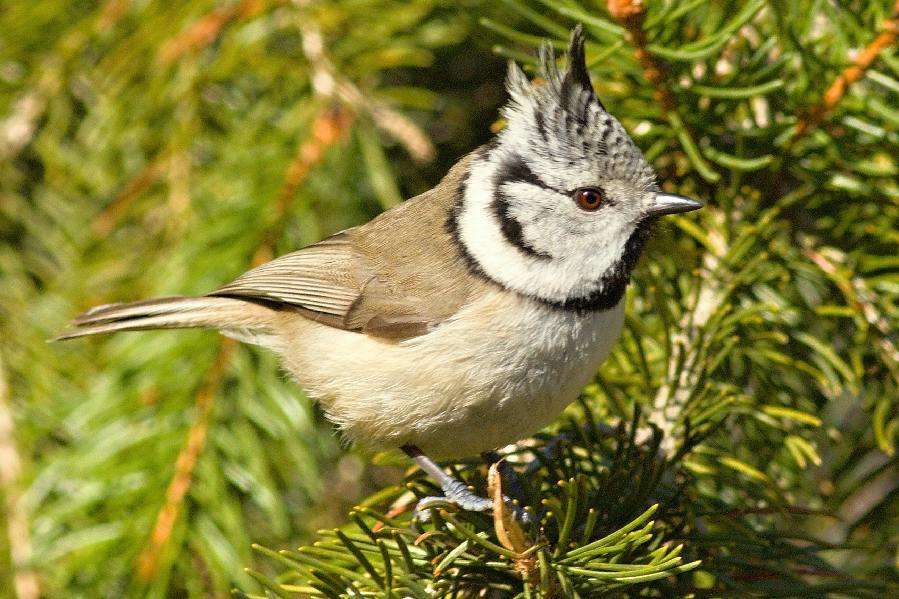
Lophophanes cristatus · sýkorka chochlatá · Crested Tit
Alternative and historical names
Slovak names
- sýkorka chochlatá (Kovalik 2010)
- sýkorka chochlatá (Matoušek 1990)
English names
- European Crested Tit (IOC 2.5 2010)
- Crested Titmouse (BOU 1923)
Scientific names
- Lophophanes cristatus (AviList 2026)
- Lophophanes cristatus (IOC 15.2 2026)
- Lophophanes cristatus (IOC 2.5 2010)
- Parus cristatus (BOU 1923)
Taxonomic synonyms
- Parus cristatus heimi (Jouard, 1929)
- Lophophanes cristatus brunnescens (Prazak, 1897)
- Parus cristatus brunnescens (Prazak, 1897)
- Parus cristatus (Linnaeus, 1758)
- Lophophanes cristatus (Linnaeus, 1758)
Birding Slovakia database
This species through our community’s eyes
Species characteristics in Slovakia
- General occurrence
- resident / R
- Breeding
- common nidificant / Nc
- Wintering
- common wintering / Wc
- Rarities committee:
- Does not require any reporting or registration by Raritties commitee
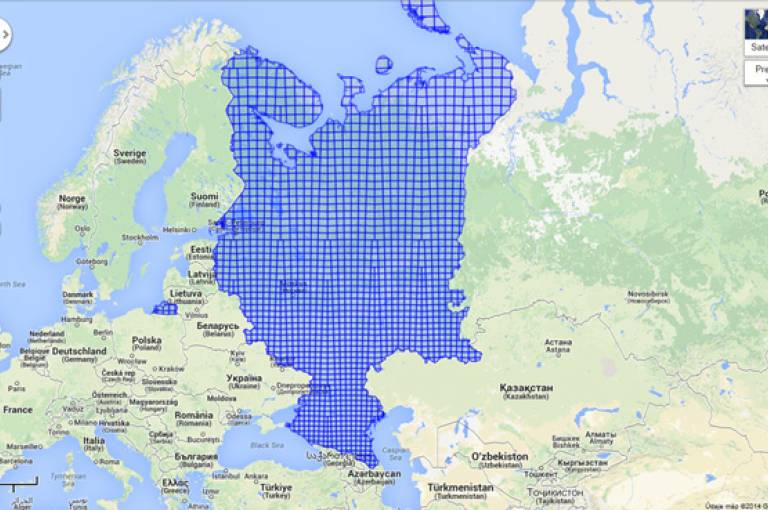
Observation map
Detailed species observation statistics

Source: the Birding.sk database. Counts reflect observer contributions, not population size.
About this species
Distribution
It occurs chiefly in Europe, especially coniferous forest regions, but also in southwestern deciduous woods. In Slovakia it is a resident breeder, characteristic of mountain coniferous and mixed forests and the pinewoods of Záhorie. It makes no regular long-distance migration. Winter movements remain associated with woodland, often alongside other tits.
Habitat
Search pine and spruce stands with dead wood, older trees and dense coniferous sections. Mixed woodland can also suit it when appropriate conifers are present. Soft bubbling calls often reveal birds before they are seen.
Breeding
It nests in a cavity in a rotten trunk or stump, which it can modify, using moss and hair as lining. A typical clutch contains 6–10 eggs. The female incubates and both parents feed the young. One or two broods may be raised depending on conditions.
Food
It eats insects, larvae and spiders, adding conifer seeds in autumn and winter. Needles and bark are searched nimbly, often in company with other small birds.
Interesting fact
The pointed black-and-white crest is recognisable without bright colours and changes with excitement. Together with the bold cheek and neck pattern, it makes this one of the most readily identifiable local tits.
Sources: Slovak Wikipedia · English Wikipedia · BTO BirdFacts
Sign in to send private feedback on the text to our editors.
Explore further
Overview and identification
Descriptions, identification and names.
- Slovak Wikipedia ↗
Taxon account in Slovak: distribution, biology and references for further reading.
https://sk.wikipedia.org/wiki/S%C3%BDkorka_chochlat%C3%A1 - English Wikipedia ↗
Taxon account in English: distribution, biology and taxonomic context.
https://en.wikipedia.org/wiki/Crested_tit - BTO BirdFacts ↗
Biology and identification in English; population figures and trends refer to Britain.
https://www.bto.org/learn/about-birds/birdfacts/crested-tit - Bird.watching: Crested Tit – identification and voice ↗
Slovak species lesson with identification features and an example vocalisation.
https://bird.watching.sk/sk/sykorka-chochlata-lophophanes-cristatus/