Sturnus vulgaris · škorec obyčajný · Common Starling
Alternative and historical names
Slovak names
- škorec obyčajný (Kovalik 2010)
- škorec lesklý (Kovalik 2010)
- škorec lesklý (Matoušek 1990)
English names
- Common Starling (IOC 2.5 2010)
- Starling (BOU 1923)
Scientific names
- Sturnus vulgaris (AviList 2026)
- Sturnus vulgaris (IOC 15.2 2026)
- Sturnus vulgaris (IOC 2.5 2010)
- Sturnus vulgaris (BOU 1923)
Taxonomic synonyms
- Sturnus vulgaris Linnaeus, 1758

Birding Slovakia database
This species through our community’s eyes
Species characteristics in Slovakia
- General occurrence
- migrant / M
- Breeding
- common nidificant / Nc
- Migration
- common transmigrant / Tc
- Wintering
- uncommon wintering / Wu
- Rarities committee:
- Does not require any reporting or registration by Raritties commitee
Observation map

Detailed species observation statistics

Source: the Birding.sk database. Counts reflect observer contributions, not population size.
About this species
Distribution
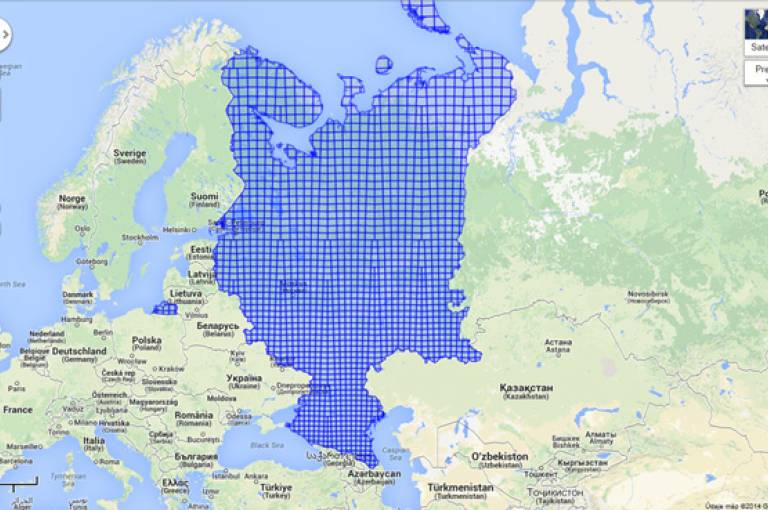
The Starling’s natural range covers Europe and much of Asia; people have introduced it to other continents. It is a common breeder in Slovakia, particularly at lower elevations. Spring and autumn passage can be conspicuous. Most birds leave, although a smaller number winter, especially in milder lowland areas.
Habitat
It uses orchards, parks, woodland edges, villages and open country with hollow trees. Feeding birds search short lawns and pastures. After breeding, flocks may visit fruit orchards and gather at communal evening roosts, including reedbeds.
Breeding
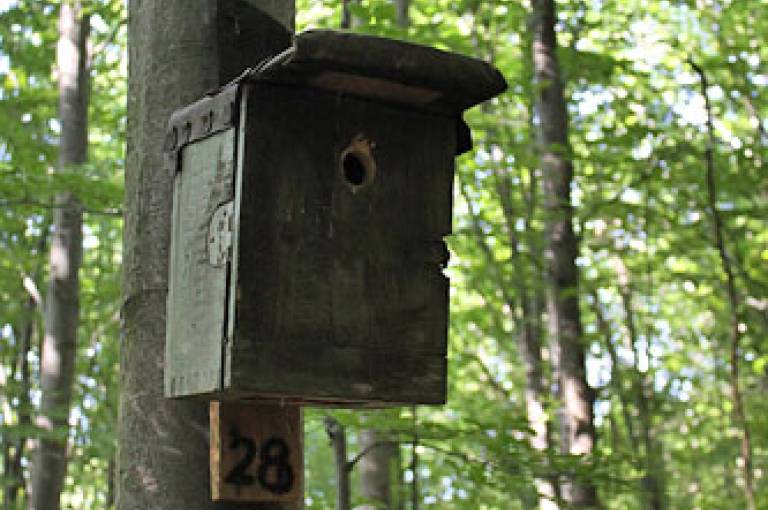
It nests in tree cavities, nestboxes and holes in buildings. Usually 4–6 bluish eggs are laid. Both parents feed the chicks, and fledglings gradually join flocks after leaving the nest.
Food
It searches soil and low vegetation for insects, larvae and earthworms. Fruit, berries and seeds become important in late summer and autumn.
Interesting fact
The Starling is an accomplished mimic. It incorporates calls of other birds and sounds from human surroundings into its song, so an unfamiliar voice from a rooftop need not belong to an unfamiliar species.
Sources: Slovak Wikipedia · English Wikipedia · BTO BirdFacts
Sign in to send private feedback on the text to our editors.
Explore further
Overview and identification
Descriptions, identification and names.
- Slovak Wikipedia ↗
Taxon account in Slovak: distribution, biology and references for further reading.
https://sk.wikipedia.org/wiki/%C5%A0korec_oby%C4%8Dajn%C3%BD - English Wikipedia ↗
Taxon account in English: distribution, biology and taxonomic context.
https://en.wikipedia.org/wiki/Common_starling - BTO BirdFacts ↗
Biology and identification in English; population figures and trends refer to Britain.
https://www.bto.org/learn/about-birds/birdfacts/starling