Plectrophenax nivalis · snehuľka severská · Snow Bunting
Alternative and historical names
Slovak names
- snehuľka severská (Kovalik 2010)
- strnádka snehová (Kovalik 2010)
- strnádka snežná (Kovalik 2010)
- strnádka snežná (Matoušek 1990)
English names
- Snow Bunting (IOC 2.5 2010)
- Snow-Bunting (BOU 1923)
Scientific names
- Plectrophenax nivalis (AviList 2026)
- Plectrophenax nivalis (IOC 15.2 2026)
- Plectrophenax nivalis (IOC 2.5 2010)
- Plectrophenax nivalis (BOU 1923)
Taxonomic synonyms
- Plectrophenax nivalis subnivalis (Brehm, 1826)
- Emberiza nivalis (Linnaeus, 1758)
- Plectrophenax nivalis (Linnaeus, 1758)
Birding Slovakia database
This species through our community’s eyes
Photographs by category
Species characteristics in Slovakia
- Migration
- uncommon transmigrant / Tu
- Wintering
- uncommon wintering / Wu
- Rarities committee:
- Does not require any reporting or registration by Raritties commitee
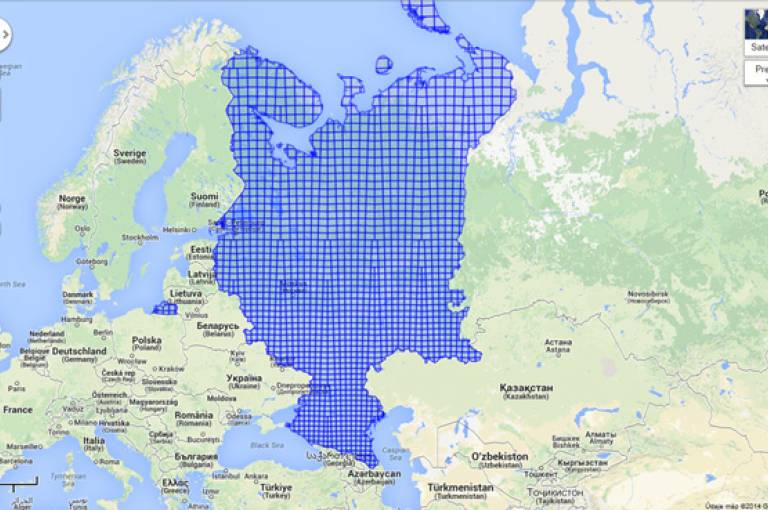
Observation map
Detailed species observation statistics

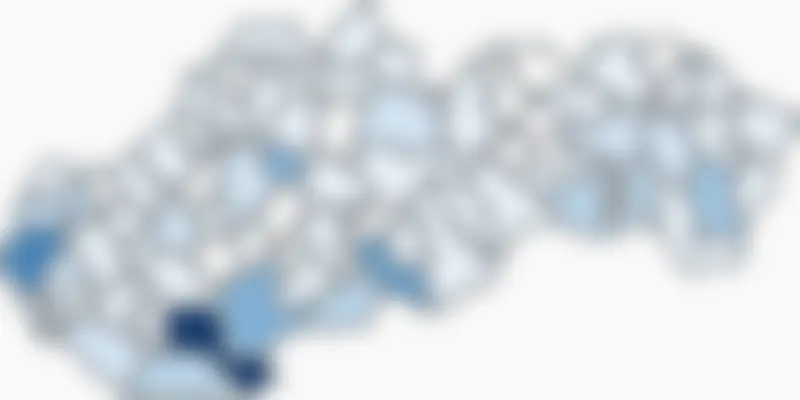
Source: the Birding.sk database. Counts reflect observer contributions, not population size.
About this species
Distribution
The Snow Bunting breeds throughout the Arctic of the Northern Hemisphere, with smaller populations in high mountains. In Slovakia it is a regular but numerically variable winter visitor and passage migrant, not a breeder. Encounters are most likely from late autumn to early spring, especially in open lowlands.
Habitat
Its home habitats include rocky tundra and high mountain plateaux. In Slovakia it uses fields, stubbles, fallows and sparsely vegetated shores of large waters. Flocks walk on the ground and exploit wind-cleared patches where seeds remain accessible in snow.
Breeding
It breeds outside Slovakia, mainly in cavities among rocks or cliff crevices. A thick lining protects the clutch from cold. The female incubates while the male brings food; chicks receive mainly invertebrates.
Food
Herb and grass seeds dominate in winter. In summer, and when feeding young, it takes insects, spiders and other small invertebrates.
Interesting fact
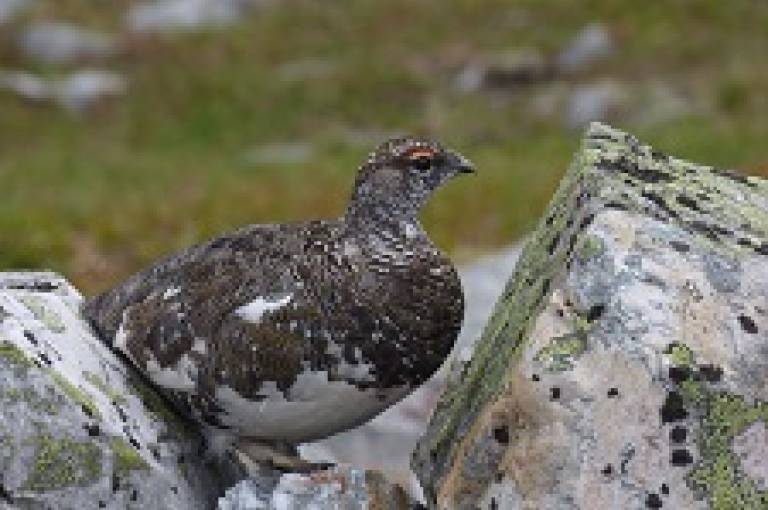
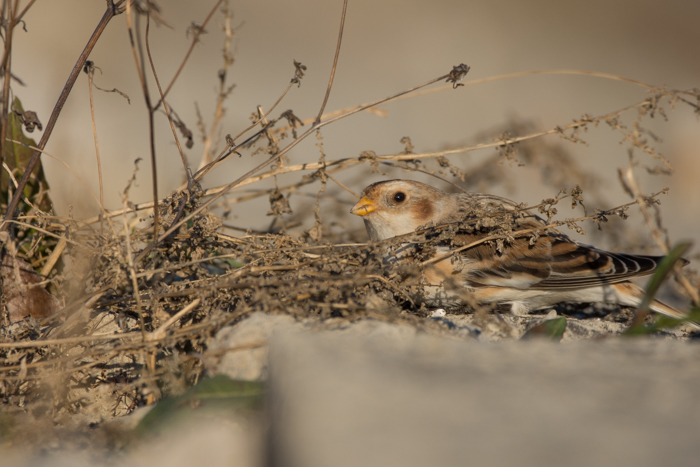
Winter birds look brownish and inconspicuous, but reveal extensive white wing patches on take-off. A flock almost invisible in a field suddenly becomes a conspicuous pale cloud.
Sources: Slovak Wikipedia · English Wikipedia · BTO BirdFacts
Sign in to send private feedback on the text to our editors.
Explore further
Overview and identification
Descriptions, identification and names.
- Slovak Wikipedia ↗
Taxon account in Slovak: distribution, biology and references for further reading.
https://sk.wikipedia.org/wiki/Snehu%C4%BEka_seversk%C3%A1 - English Wikipedia ↗
Taxon account in English: distribution, biology and taxonomic context.
https://en.wikipedia.org/wiki/Snow_bunting - BTO BirdFacts ↗
Biology and identification in English; population figures and trends refer to Britain.
https://www.bto.org/learn/about-birds/birdfacts/snow-bunting
Sounds, photographs and video
Recordings and visual comparisons.
- BTO: identifying winter buntings ↗
English comparative identification video covering appearance and vocalisations.
https://www.bto.org/learn/skills/bird-identification/videos/winter-buntings