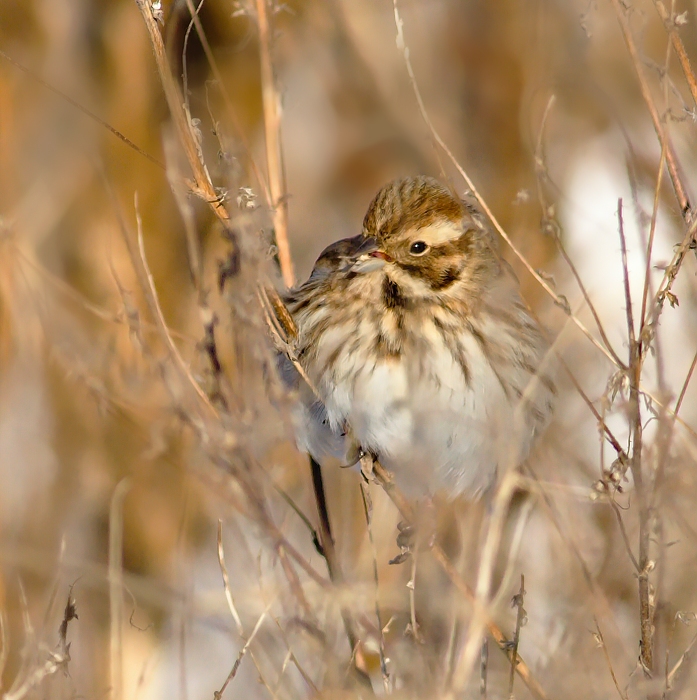
Schoeniclus schoeniclus · strnádka trstinová · Common Reed Bunting
Alternative and historical names
Slovak names
- strnádka trstinová (Kovalik 2010)
- strnádka trsťová (Kovalik 2010)
- strnádka trsťová (Matoušek 1990)
English names
- Common Reed Bunting (IOC 2.5 2010)
- Reed-Bunting (BOU 1923)
Scientific names
- Schoeniclus schoeniclus (AviList 2026)
- Emberiza schoeniclus (IOC 15.2 2026)
- Emberiza schoeniclus (IOC 2.5 2010)
- Emberiza schoeniclus (BOU 1923)
Taxonomic synonyms
- Emberiza schoeniclus turonensis (Steinbacher, 1930)
- Fringilla spec (Linnaeus, 1766)
- Fringilla schoeniclus (Linnaeus, 1758)
- Emberiza schoeniclus (Linnaeus, 1758)
Birding Slovakia database
This species through our community’s eyes
Photographs by category
Species characteristics in Slovakia
- General occurrence
- migrant / M
- Breeding
- common nidificant / Nc
- Migration
- common transmigrant / Tc
- Wintering
- common wintering / Wc
- Rarities committee:
- Does not require any reporting or registration by Raritties commitee
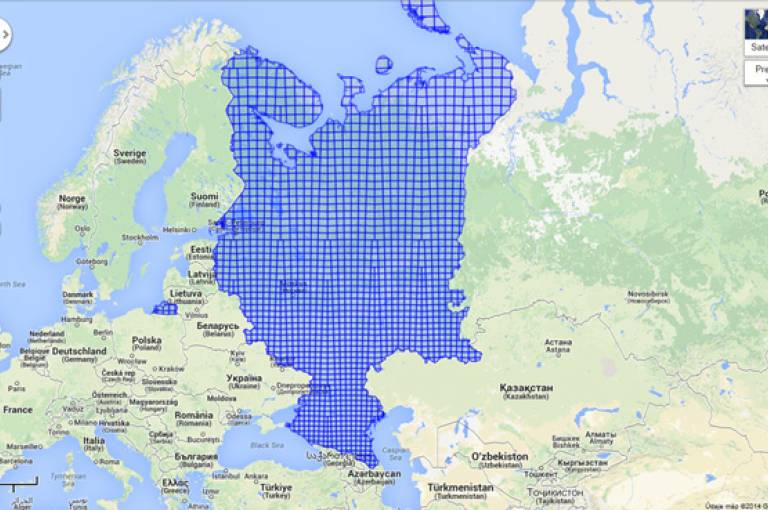
Observation map
Detailed species observation statistics

Source: the Birding.sk database. Counts reflect observer contributions, not population size.
About this species
Distribution
The Reed Bunting breeds across Europe and much of temperate Asia. It is a common breeder in suitable Slovak wetlands, particularly in lowlands and basins. It migrates in spring and autumn, and some birds also occur in winter. Winter groups need not consist of the same individuals that bred locally.
Habitat
Look in reedbeds, bulrush and sedge stands, and damp meadows with shrubs. Males sing from raised stems or bushes. In winter it also leaves the immediate waterside to collect seeds in fields and weedy areas.
Breeding
The nest is hidden low in a grass or sedge tussock or dense ground-level vegetation. Usually 4–5 eggs are laid. Both parents bring food to the chicks, and pairs may breed repeatedly.
Food
Seeds predominate in winter. During chick-rearing it collects small insects, larvae and other invertebrates from vegetation and near the ground.
Interesting fact
It often flicks or opens its tail, showing white outer feathers. This can be useful even in winter, when a male lacks the conspicuous black-headed appearance of spring.
Sources: Slovak Wikipedia · English Wikipedia · BTO BirdFacts
Sign in to send private feedback on the text to our editors.
Explore further
Overview and identification
Descriptions, identification and names.
- Slovak Wikipedia ↗
Taxon account in Slovak: distribution, biology and references for further reading.
https://sk.wikipedia.org/wiki/Strn%C3%A1dka_trstinov%C3%A1 - English Wikipedia ↗
Taxon account in English: distribution, biology and taxonomic context.
https://en.wikipedia.org/wiki/Common_reed_bunting - BTO BirdFacts ↗
Biology and identification in English; population figures and trends refer to Britain.
https://www.bto.org/learn/about-birds/birdfacts/reed-bunting
Sounds, photographs and video
Recordings and visual comparisons.
- BTO: identifying winter buntings ↗
English comparative identification video covering appearance and vocalisations.
https://www.bto.org/learn/skills/bird-identification/videos/winter-buntings - BTO: identifying sparrows and Reed Bunting ↗
English comparative identification video covering appearance and vocalisations.
https://www.bto.org/learn/skills/bird-identification/videos/common-sparrows-reed-bunting