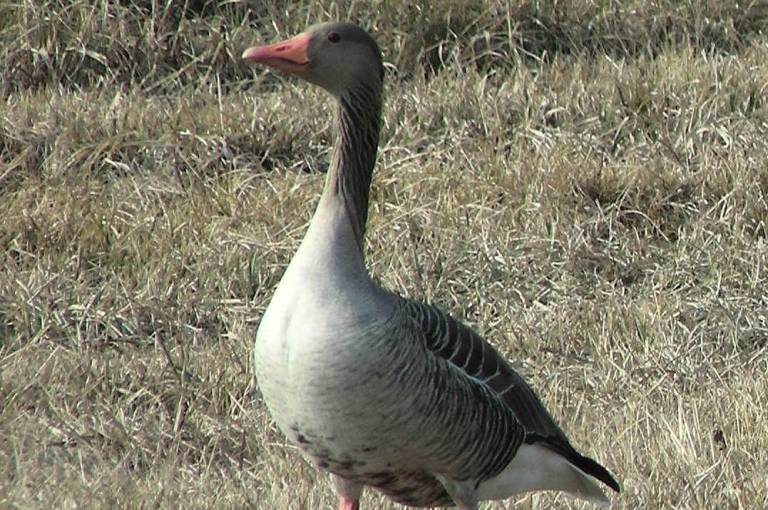
Alopochen aegyptiaca · húska štíhla · Egyptian Goose
Alternative and historical names
Slovak names
- húska štíhla (Kovalik 2010)
- hrdzaňa štíhla (Kovalik 2010)
- hus egyptská (Kovalik 2010)
- kazarka štíhla (Kovalik 2010)
- kazarka štíhla (Matoušek 1990)
- húska štíhla (Ferianc 1986)
English names
- Egyptian Goose (IOC 2.5 2010)
Scientific names
- Alopochen aegyptiaca (AviList 2026)
- Alopochen aegyptiaca (IOC 15.2 2026)
- Alopochen aegyptiaca (IOC 2.5 2010)
Taxonomic synonyms
- Anas aegyptiaca (Linnaeus, 1766)
- Alopochen aegyptiaca (Linnaeus, 1766)

Birding Slovakia database
This species through our community’s eyes
Species characteristics in Slovakia
- Breeding
- rare nidificant / Nr
- Migration
- uncommon transmigrant / Tu
- Wintering
- uncommon wintering / Wu
- Rarities committee:
- Sigthings of this specie are registered by Raritties commitee
Conservation — Red Lists
- Slovakia 2023breeding population
- Breeding population Period: 2013–2023 Source: Demko M. a kol. 2025: Červený zoznam vtákov Slovenska: aktualizácia 2013 – 2023. Tichodroma 37: 107–117. Online 18. 1. 2026. DOI: 10.31577/tichodroma.2025.37.18. Výsledky, s. 112, výslovne menovaný druh Druh uvedený v texte medzi 19 druhmi NA.
Observation map

Detailed species observation statistics

Source: the Birding.sk database. Counts reflect observer contributions, not population size.
About this species
Distribution
The Egyptian Goose is native to Africa. Ornamental collections gave rise to self-sustaining European populations that continue to spread. In Slovakia it occurs in different seasons and also breeds locally. The December 2024 checklist gives categories C and D, so the origin of a particular visitor is not always clear. It is not a regular arrival of native African migrants.
Habitat
It uses rivers, reservoirs, ponds and adjoining lawns or fields. It can also live in urban parks with access to water and food. In Slovakia it may occur among geese and ducks, but also rests alone on islands or raised sites.
Breeding
Nest placement is highly variable: on the ground, in a cavity or in an abandoned large bird’s nest. The female usually lays 6–10 eggs. Both parents accompany the young and vigorously defend the family’s surroundings.
Food
It mainly grazes on grasses and other plants and collects seeds and grain, occasionally taking small animal food.
Interesting fact
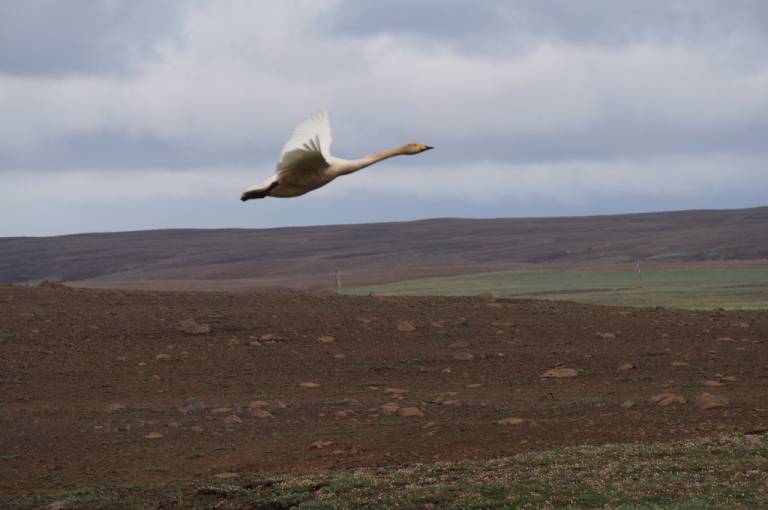
Flight reveals large white wing panels that a resting bird partly conceals. The brown patch around the eye is another conspicuous adult feature.
Sources: Slovak Wikipedia · English Wikipedia · BTO BirdFacts · Records Committee: Slovak checklist, 2024
Sign in to send private feedback on the text to our editors.
Explore further
Overview and identification
Descriptions, identification and names.
- Slovak Wikipedia ↗
Taxon account in Slovak: distribution, biology and references for further reading.
https://sk.wikipedia.org/wiki/H%C3%BAska_%C5%A1t%C3%ADhla - English Wikipedia ↗
Taxon account in English: distribution, biology and taxonomic context.
https://en.wikipedia.org/wiki/Egyptian_goose - BTO BirdFacts ↗
Biology and identification in English; population figures and trends refer to Britain.
https://www.bto.org/learn/about-birds/birdfacts/egyptian-goose - Records Committee: Slovak checklist, 2024 ↗
Official checklist and occurrence categories as of December 2024; XLSX file.
https://www.vtaky.sk/media/Zoznam_vtakov_Slovenska_IOC_december_2024.xlsx