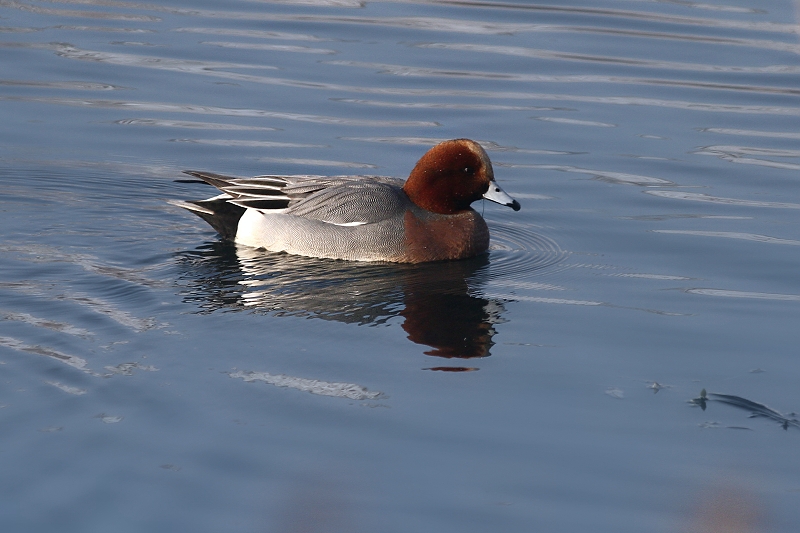
Mareca penelope · kačica hvizdárka · Eurasian Wigeon
Alternative and historical names
Slovak names
- kačica hvizdárka (Kovalik 2010)
- kačica hvízdavá (Matoušek 1990)
- kačica hvizdárka (Ferianc 1986)
English names
- Eurasian Wigeon (IOC 2.5 2010)
- Wigeon (BOU 1923)
Scientific names
- Mareca penelope (AviList 2026)
- Mareca penelope (IOC 15.2 2026)
- Anas penelope (IOC 2.5 2010)
- Mareca penelope (BOU 1923)
Taxonomic synonyms
- Anas penelope (Linnaeus, 1758)
- Mareca penelope (Linnaeus, 1758)
Birding Slovakia database
This species through our community’s eyes
Photographs by category
Species characteristics in Slovakia
- Migration
- common transmigrant / Tc
- Wintering
- uncommon wintering / Wu
- Rarities committee:
- Does not require any reporting or registration by Raritties commitee
Observation map

Detailed species observation statistics

Source: the Birding.sk database. Counts reflect observer contributions, not population size.
About this species
Distribution
It breeds in northern and temperate Eurasia and winters farther south in Europe, Africa and Asia. In Slovakia it is a regular and locally numerous passage migrant, especially in spring and autumn. Some birds also winter, usually on larger ice-free waters. It is not a regular Slovak breeder.
Habitat
In the north it uses lakes and open wetlands with plant food. In Slovakia, look on fishponds, reservoirs and river arms, as well as adjoining flooded meadows. It often grazes short grass beside water, so a flock need not remain on the surface all the time.
Breeding
The nest is hidden on the ground in dense vegetation near water. The female incubates and leads the ducklings, which feed themselves. Pairs may form on the wintering grounds, so spring pairs on Slovak waters do not by themselves imply local nesting.
Food
Aquatic plants, grasses and other green material dominate the diet, supplemented by seeds and small invertebrates. It feeds at the surface, by upending and by grazing along the bank.
Interesting fact
The male's clear whistle can help locate the species in a mixed duck flock. Its cream forehead and reddish head then confirm where the sound is coming from.
Sources: Slovak Wikipedia · English Wikipedia · BTO BirdFacts
Sign in to send private feedback on the text to our editors.
Explore further
Overview and identification
Descriptions, identification and names.
- Slovak Wikipedia ↗
Taxon account in Slovak: distribution, biology and references for further reading.
https://sk.wikipedia.org/wiki/Ka%C4%8Dica_hvizd%C3%A1rka - English Wikipedia ↗
Taxon account in English: distribution, biology and taxonomic context.
https://en.wikipedia.org/wiki/Eurasian_wigeon - BTO BirdFacts ↗
Biology and identification in English; population figures and trends refer to Britain.
https://www.bto.org/learn/about-birds/birdfacts/wigeon