Anas platyrhynchos · kačica divá · Mallard
Alternative and historical names
Slovak names
- kačica divá (Kovalik 2010)
- kačica divá (veľká) (Kovalik 2010)
- kačica divá (Matoušek 1990)
- kačica divá (Ferianc 1986)
English names
- Mallard (IOC 2.5 2010)
- Wild Duck or Mallard (BOU 1923)
Scientific names
- Anas platyrhynchos (AviList 2026)
- Anas platyrhynchos (IOC 15.2 2026)
- Anas platyrhynchos (IOC 2.5 2010)
- Anas platyrhynchos (BOU 1923)
Taxonomic synonyms
- Anas oustaleti (Salvadori, 1894)
- Anas boschas (Linnaeus, 1758)
- Anas platyrhynchos Linnaeus, 1758
Birding Slovakia database
This species through our community’s eyes
Species characteristics in Slovakia
- General occurrence
- mainly resident, minority is migratory / R(M)
- Breeding
- common nidificant / Nc
- Migration
- common transmigrant / Tc
- Wintering
- common wintering / Wc
- Rarities committee:
- Does not require any reporting or registration by Raritties commitee
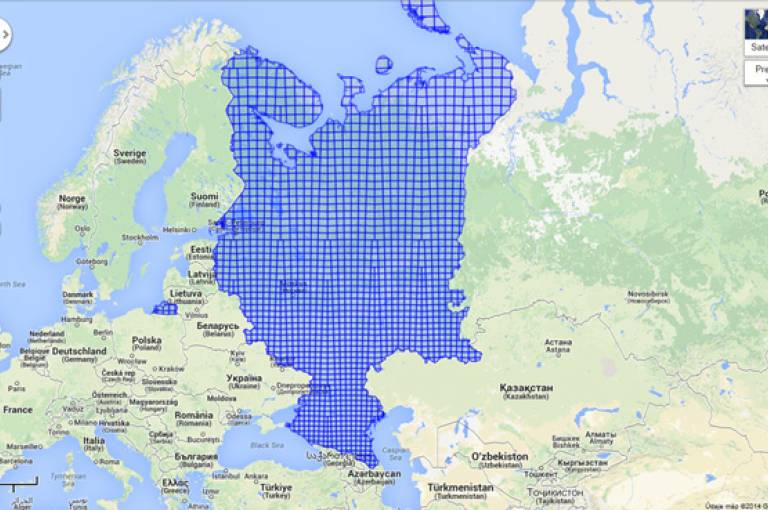
Observation map
Detailed species observation statistics

Source: the Birding.sk database. Counts reflect observer contributions, not population size.
About this species
Distribution
It is native across extensive parts of Eurasia, North America and North Africa and has been introduced elsewhere. In Slovakia it is one of the commonest waterbirds and a widespread breeder from the lowlands into the mountains. It occurs year-round, with local birds joined by migrants and winter visitors from farther north.
Habitat
It uses rivers, ponds, lakes, wetlands and urban pools. Even small, strongly modified waters can be suitable if food and resting places are available. A nesting female may choose shelter surprisingly far from the bank.
Breeding
The nest may be on the ground in vegetation, but also in a cavity, another bird's old nest or on a building. The female incubates and leads the ducklings, which move to water soon after hatching and feed themselves.
Food
It is omnivorous, taking seeds, green plant material and aquatic invertebrates, and occasionally small vertebrate prey. Diet changes with the season and local availability.
Interesting fact
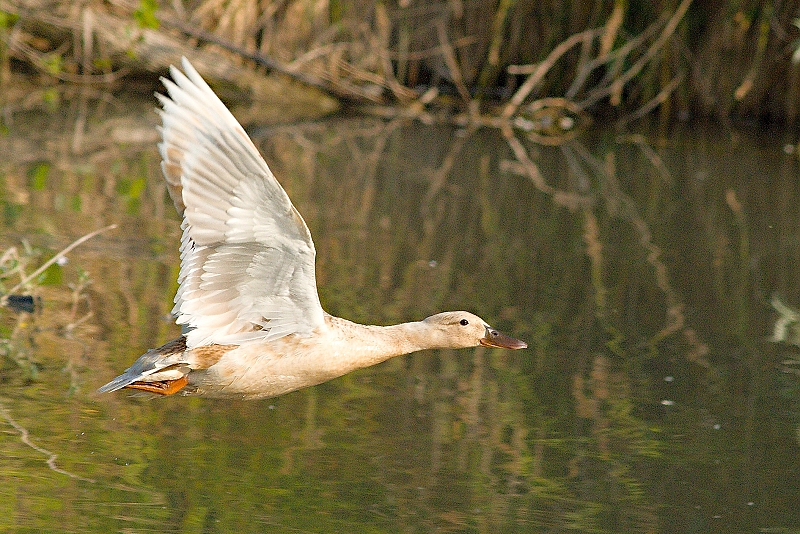
After breeding, the male temporarily loses his striking plumage and can resemble a female. He is flightless for a time while replacing the flight feathers, making inconspicuous plumage and safe cover particularly useful.
Sources: Slovak Wikipedia · English Wikipedia · BTO BirdFacts
Sign in to send private feedback on the text to our editors.
Explore further
Overview and identification
Descriptions, identification and names.
- Slovak Wikipedia ↗
Taxon account in Slovak: distribution, biology and references for further reading.
https://sk.wikipedia.org/wiki/Ka%C4%8Dica_div%C3%A1 - English Wikipedia ↗
Taxon account in English: distribution, biology and taxonomic context.
https://en.wikipedia.org/wiki/Mallard - BTO BirdFacts ↗
Biology and identification in English; population figures and trends refer to Britain.
https://www.bto.org/learn/about-birds/birdfacts/mallard - BTO: Identifying female dabbling ducks ↗
English identification video comparing this taxon with similar species and explaining distinguishing features.
https://www.bto.org/learn/skills/bird-identification/videos/female-dabbling-ducks