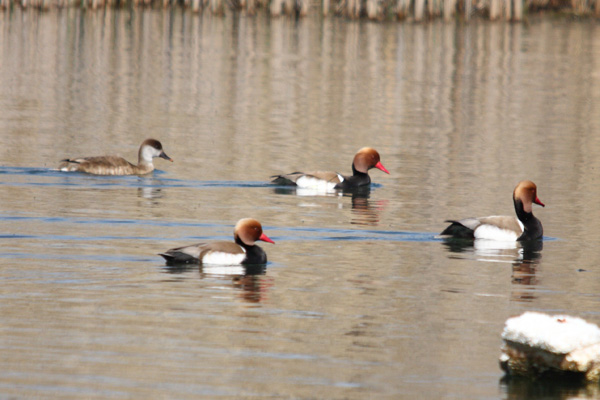
Netta rufina · hrdzavka potápavá · Red-crested Pochard
Alternative and historical names
Slovak names
- kačica hrdzavohlavá (Kovalik 2010)
- hrdzavka potápavá (Kovalik 2010)
- hrdzavka potápavá (Matoušek 1990)
- hrdzavka potápavá (Ferianc 1986)
English names
- Red-crested Pochard (IOC 2.5 2010)
- Red-crested Pochard (BOU 1923)
Scientific names
- Netta rufina (AviList 2026)
- Netta rufina (IOC 15.2 2026)
- Netta rufina (IOC 2.5 2010)
- Netta rufina (BOU 1923)
Taxonomic synonyms
- Anas rufina (Pallas, 1773)
- Netta rufina (Pallas, 1773)
Birding Slovakia database
This species through our community’s eyes
Photographs by category
Species characteristics in Slovakia
- General occurrence
- migrant / M
- Breeding
- rare nidificant / Nr
- Migration
- uncommon transmigrant / Tu
- Wintering
- rare wintering / Wr
- Rarities committee:
- Does not require any reporting or registration by Raritties commitee
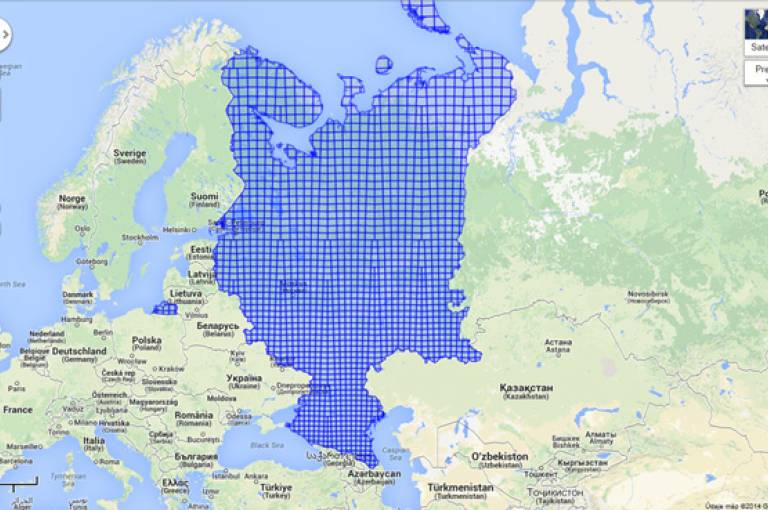
Observation map

Detailed species observation statistics

Source: the Birding.sk database. Counts reflect observer contributions, not population size.
About this species
Distribution
It breeds in a scattered range from southern and central Europe to central Asia. Some populations move south for winter, while others remain closer to their breeding areas. In Slovakia it is a scarce and local breeder, especially in the west, and a regular passage visitor. It can also winter on suitable ice-free waters.
Habitat
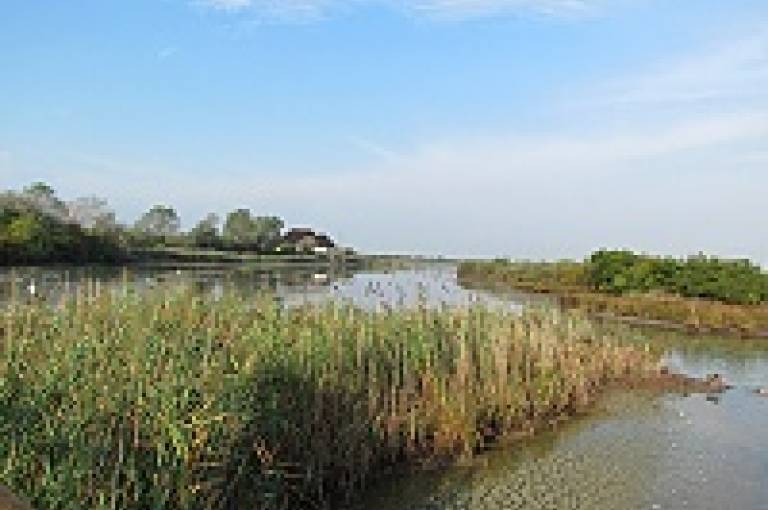
It favours ponds, lakes and gravel pits with abundant aquatic vegetation and open water. Breeding also requires sheltered banks or small islands. In Slovakia it can be seen on larger reservoirs and the Danube, often in mixed groups with other diving ducks.
Breeding
The nest is placed in dense bankside vegetation, sometimes on an island. The female incubates and leads the ducklings. Submerged vegetation and quiet margins remain important even where adults appear relatively unobtrusive on open water.
Food
It feeds mainly on aquatic plants, shoots and seeds, supplemented by invertebrates. It obtains food by diving, but also by dipping its head or upending.
Interesting fact
Being a diving duck does not mean it must submerge completely for every mouthful. In shallow water it may collect vegetation much like a dabbling duck, adjusting its feeding method to the depth of the available food.
Sources: Slovak Wikipedia · English Wikipedia · BTO BirdFacts
Sign in to send private feedback on the text to our editors.
Explore further
Overview and identification
Descriptions, identification and names.
- Slovak Wikipedia ↗
Taxon account in Slovak: distribution, biology and references for further reading.
https://sk.wikipedia.org/wiki/Hrdzavka_pot%C3%A1pav%C3%A1 - English Wikipedia ↗
Taxon account in English: distribution, biology and taxonomic context.
https://en.wikipedia.org/wiki/Red-crested_pochard - BTO BirdFacts ↗
Biology and identification in English; population figures and trends refer to Britain.
https://www.bto.org/learn/about-birds/birdfacts/red-crested-pochard