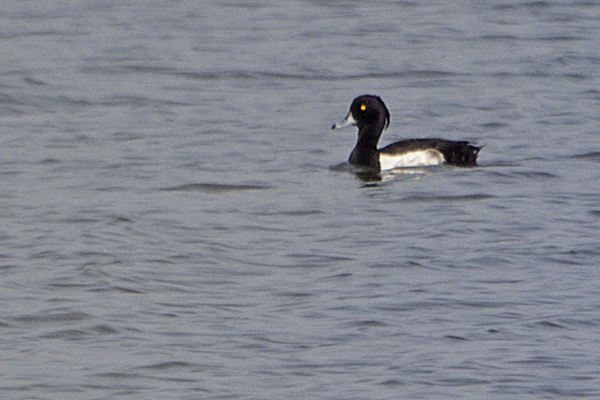
Aythya fuligula · chochlačka vrkočatá · Tufted Duck
Alternative and historical names
Slovak names
- chochlačka vrkočatá (Kovalik 2010)
- chochlačka vrkočatá (Matoušek 1990)
- chochlačka vrkočatá (Ferianc 1986)
English names
- Tufted Duck (IOC 2.5 2010)
- Tufted Duck (BOU 1923)
Scientific names
- Aythya fuligula (AviList 2026)
- Aythya fuligula (IOC 15.2 2026)
- Aythya fuligula (IOC 2.5 2010)
- Nyroca fuligula (BOU 1923)
Taxonomic synonyms
- Fuligula cristata (Leach, 1816)
- Anas fuligula (Linnaeus, 1758)
- Fuligula fuligula (Linnaeus, 1758)
- Nyroca fuligula (Linnaeus, 1758)
- Aythya fuligula (Linnaeus, 1758)
Birding Slovakia database
This species through our community’s eyes
Photographs by category
Species characteristics in Slovakia
- General occurrence
- some are resident, some are migratory / R+M
- Breeding
- common nidificant / Nc
- Migration
- common transmigrant / Tc
- Wintering
- common wintering / Wc
- Rarities committee:
- Does not require any reporting or registration by Raritties commitee
Conservation — Red Lists
- Slovakia 2023breeding population
- Breeding population Period: 2013–2023 Source: Demko M. a kol. 2025: Červený zoznam vtákov Slovenska: aktualizácia 2013 – 2023. Tichodroma 37: 107–117. Online 18. 1. 2026. DOI: 10.31577/tichodroma.2025.37.18. Príloha 1, s. 116, riadok 2, stĺpec 6 Criteria: D1
- Europe 2021
- Population scope unspecified Source: BirdLife International 2021: European Red List of Birds. Publications Office of the European Union, Luxembourg. Reported in: Demko M. a kol. 2025: Červený zoznam vtákov Slovenska: aktualizácia 2013 – 2023. Tichodroma 37: 107–117. Online 18. 1. 2026. DOI: 10.31577/tichodroma.2025.37.18. Príloha 1, s. 116, riadok 2, stĺpec 4
- World 2025
- Species Source: BirdLife International 2025: Species factsheets. Citované v Demko a kol. 2025, prístup 16. 4. 2025. Reported in: Demko M. a kol. 2025: Červený zoznam vtákov Slovenska: aktualizácia 2013 – 2023. Tichodroma 37: 107–117. Online 18. 1. 2026. DOI: 10.31577/tichodroma.2025.37.18. Príloha 1, s. 116, riadok 2, stĺpec 3
Previous assessments
- Slovakia 2013
- Breeding population Period: 2002–2012 Source: Demko M., Krištín A. & Pačenovský S. 2014: Červený zoznam vtákov Slovenska. SOS/BirdLife Slovensko, Bratislava. Zdroj stĺpca SK 2013 podľa poznámky 5 prílohy Demko a kol. 2025. Reported in: Demko M. a kol. 2025: Červený zoznam vtákov Slovenska: aktualizácia 2013 – 2023. Tichodroma 37: 107–117. Online 18. 1. 2026. DOI: 10.31577/tichodroma.2025.37.18. Príloha 1, s. 116, riadok 2, stĺpec 5 Category downgraded by 1 level due to surrounding populations.
Observation map

Detailed species observation statistics

Source: the Birding.sk database. Counts reflect observer contributions, not population size.
About this species
Distribution
It breeds in temperate and northern Eurasia and winters farther south, often inland. In Slovakia it is a regular breeder on suitable waters and one of the commonest diving ducks during migration and winter. Year-round presence at a site may nevertheless involve a succession of local and visiting birds.
Habitat
It uses fishponds, lakes, gravel pits and reservoirs, requiring vegetation on banks or islands for breeding. In winter it also frequents large rivers. It often forms mixed flocks with Common Pochards and other waterbirds, especially on safe resting waters.
Breeding
The female nests in ground vegetation close to water, often on an island. She incubates and leads the ducklings, which learn to dive very early. Quiet overgrown margins provide cover for both the clutch and small young.
Food
It mainly takes molluscs, aquatic insects and other bottom-dwelling invertebrates, also eating seeds and other plant material according to local availability.
Interesting fact
The tuft is not equally conspicuous at all times. It is shorter in females and can become hard to see when a bird rests or its feathers are wet, so identification should not depend solely on an obvious crest.
Sources: Slovak Wikipedia · English Wikipedia · BTO BirdFacts
Sign in to send private feedback on the text to our editors.
Explore further
Overview and identification
Descriptions, identification and names.
- Slovak Wikipedia ↗
Taxon account in Slovak: distribution, biology and references for further reading.
https://sk.wikipedia.org/wiki/Chochla%C4%8Dka_vrko%C4%8Dat%C3%A1 - English Wikipedia ↗
Taxon account in English: distribution, biology and taxonomic context.
https://en.wikipedia.org/wiki/Tufted_duck - BTO BirdFacts ↗
Biology and identification in English; population figures and trends refer to Britain.
https://www.bto.org/learn/about-birds/birdfacts/tufted-duck - BTO: Identifying diving ducks ↗
English identification video comparing this taxon with similar species and explaining distinguishing features.
https://www.bto.org/learn/skills/bird-identification/videos/diving-ducks