Aythya marila · chochlačka morská · Greater Scaup
Alternative and historical names
Slovak names
- chochlačka morská (Kovalik 2010)
- chochlačka morská (Matoušek 1990)
- chochlačka morská (Ferianc 1986)
English names
- Greater Scaup (IOC 2.5 2010)
- Scaup (BOU 1923)
Scientific names
- Aythya marila (AviList 2026)
- Aythya marila (IOC 15.2 2026)
- Aythya marila (IOC 2.5 2010)
- Nyroca marila (BOU 1923)
Taxonomic synonyms
- Nyroca marila (Linnaeus, 1761)
- Anas marila (Linnaeus, 1761)
- Aythya marila (Linnaeus, 1761)
Birding Slovakia database
This species through our community’s eyes
Photographs by category
Species characteristics in Slovakia
- Migration
- rare transmigrant / Tr
- Wintering
- rare wintering / Wr
- Rarities committee:
- Does not require any reporting or registration by Raritties commitee
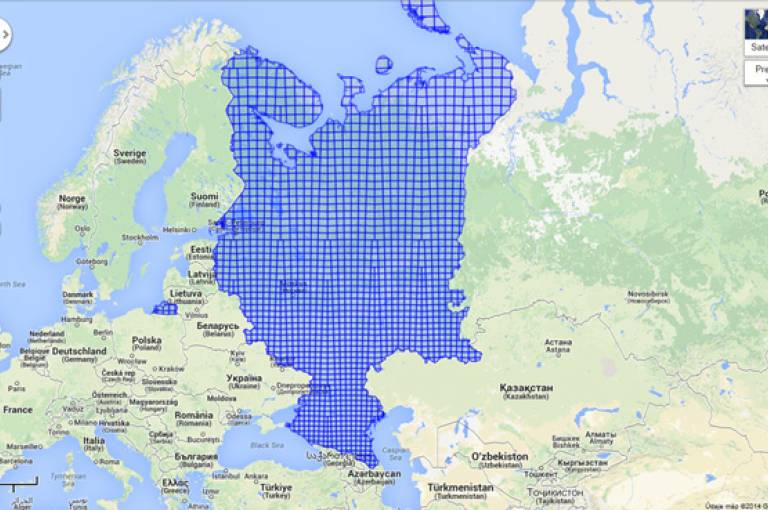
Observation map
Detailed species observation statistics

Source: the Birding.sk database. Counts reflect observer contributions, not population size.
About this species
Distribution
It breeds in northern Europe, Asia and North America, especially around tundra and northern lakes. It winters mainly on sea coasts but also on large inland waters. In Slovakia it is a scarce migrant and winter visitor, recurring regularly at some sites. It does not breed here; encounters are most likely from late autumn to spring.
Habitat
Look on large reservoirs, gravel pits and broad river sections. It often joins flocks of Tufted Ducks and Common Pochards, sometimes far from shore. Breeding birds use wetlands and islands beside northern lakes, while winter feeding areas are usually more open.
Breeding
It builds a ground nest near water, often on an island or within wetland vegetation. The female incubates and accompanies the young, which feed themselves and learn to dive early.
Food
It dives for molluscs, crustaceans, insect larvae and other small aquatic animals. Plant material and seeds are also eaten.
Interesting fact
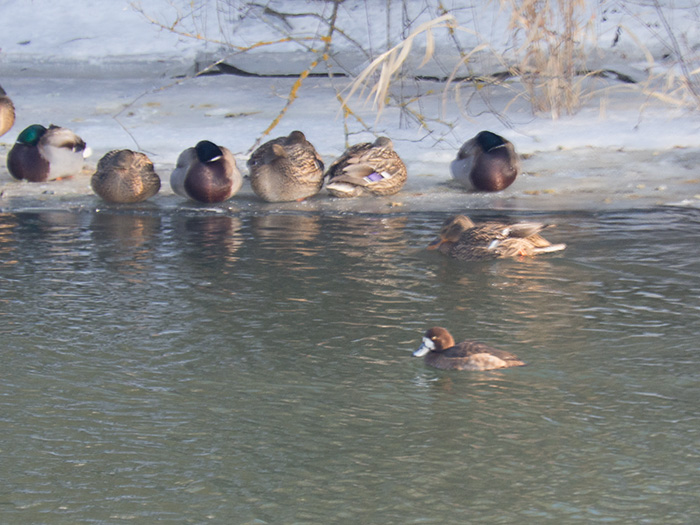
The female's white patch around the bill is useful but not unique: a female Tufted Duck can show it too. A rounded head, broad bill and absence of a tuft should be assessed together.
Sources: Slovak Wikipedia · English Wikipedia · BTO BirdFacts
Sign in to send private feedback on the text to our editors.
Explore further
Overview and identification
Descriptions, identification and names.
- Slovak Wikipedia ↗
Taxon account in Slovak: distribution, biology and references for further reading.
https://sk.wikipedia.org/wiki/Chochla%C4%8Dka_morsk%C3%A1 - English Wikipedia ↗
Taxon account in English: distribution, biology and taxonomic context.
https://en.wikipedia.org/wiki/Greater_scaup - BTO BirdFacts ↗
Biology and identification in English; population figures and trends refer to Britain.
https://www.bto.org/learn/about-birds/birdfacts/scaup - BTO: Identifying diving ducks ↗
English identification video comparing this taxon with similar species and explaining distinguishing features.
https://www.bto.org/learn/skills/bird-identification/videos/diving-ducks