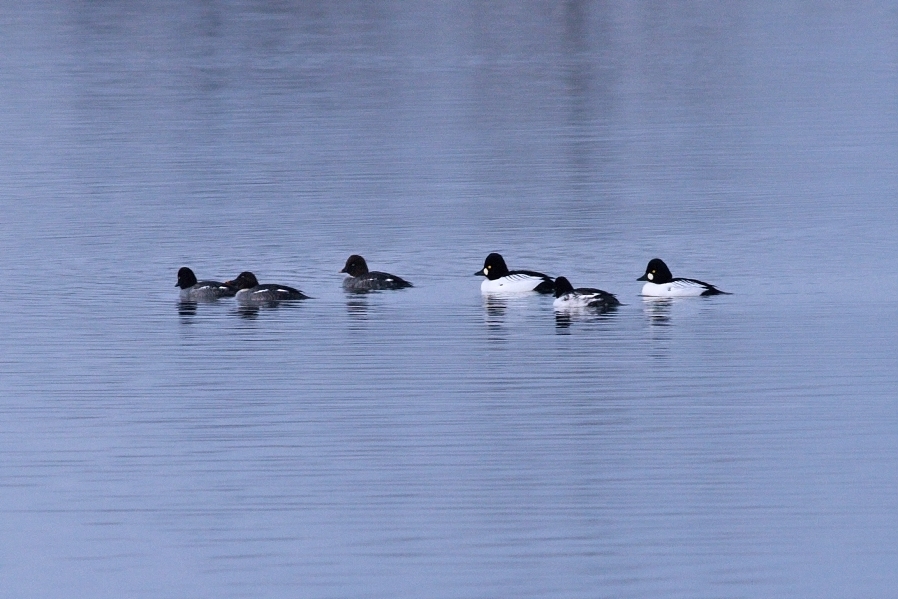
Bucephala clangula · hlaholka severská · Common Goldeneye
Alternative and historical names
Slovak names
- hlaholka severská (Kovalik 2010)
- hlaholka obyčajná (Kovalik 2010)
- hohoľ obyčajný (Kovalik 2010)
- hlaholka severská (Matoušek 1990)
- hlaholka obyčajná (Ferianc 1986)
- hlaholka obyčajná (Ferianc 1958)
English names
- Common Goldeneye (IOC 2.5 2010)
- Golden-eye (BOU 1923)
Scientific names
- Bucephala clangula (AviList 2026)
- Bucephala clangula (IOC 15.2 2026)
- Bucephala clangula (IOC 2.5 2010)
- Glaucionetta clangula (BOU 1923)
Taxonomic synonyms
- Anas glaucion (Linnaeus, 1758)
- Glaucionetta clangula (Linnaeus, 1758)
- Nyroca clangula (Linnaeus, 1758)
- Anas clangula (Linnaeus, 1758)
- Bucephala clangula (Linnaeus, 1758)
Birding Slovakia database
This species through our community’s eyes
Photographs by category
Species characteristics in Slovakia
- Migration
- common transmigrant / Tc
- Wintering
- common wintering / Wc
- Rarities committee:
- Does not require any reporting or registration by Raritties commitee
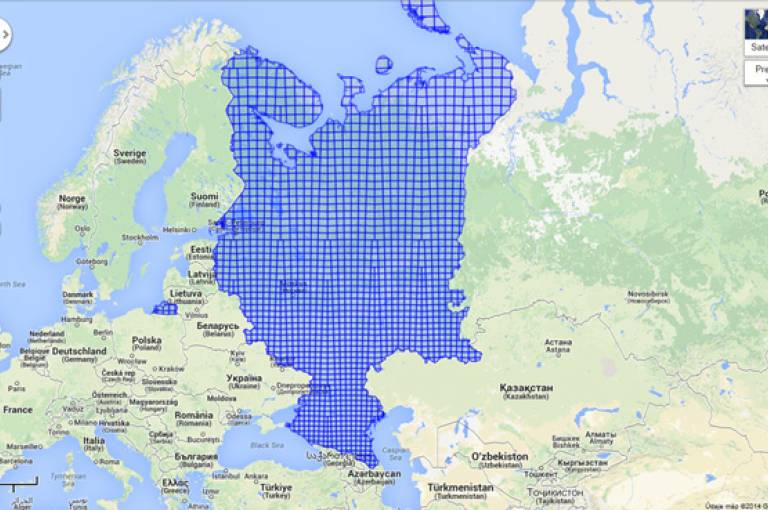
Observation map

Detailed species observation statistics

Source: the Birding.sk database. Counts reflect observer contributions, not population size.
About this species
Distribution
It breeds in boreal Europe, Asia and North America and winters farther south on both marine and inland waters. In Slovakia it is a regular migrant and locally numerous winter visitor, rather than a regular breeder. Larger groups occur from autumn to spring, especially on large ice-free rivers and reservoirs.
Habitat
Breeding requires wooded lakes and rivers with tree cavities. In Slovakia it is most often seen on the Danube, other larger rivers, reservoirs and gravel pits. It feeds on open water, frequently in small groups scattered across a broad surface.
Breeding
It nests in tree cavities, including holes made by large woodpeckers, and also uses suitable nest boxes. The female incubates and leads the young, which leave the cavity soon after hatching and move to water.
Food
It dives for aquatic insects, their larvae, molluscs and crustaceans. Other animals and plant material form a smaller, locally variable part of the diet.
Interesting fact
Its striking courtship can already be seen on wintering grounds: the male throws his head backwards and displays his contrasting plumage. Courtship on a Slovak river therefore does not mean the pair will also nest nearby.
Sources: Slovak Wikipedia · English Wikipedia · BTO BirdFacts · State Nature Conservancy: Danube floodplains
Sign in to send private feedback on the text to our editors.
Explore further
Overview and identification
Descriptions, identification and names.
- Slovak Wikipedia ↗
Taxon account in Slovak: distribution, biology and references for further reading.
https://sk.wikipedia.org/wiki/Hlaholka_seversk%C3%A1 - English Wikipedia ↗
Taxon account in English: distribution, biology and taxonomic context.
https://en.wikipedia.org/wiki/Common_goldeneye - BTO BirdFacts ↗
Biology and identification in English; population figures and trends refer to Britain.
https://www.bto.org/learn/about-birds/birdfacts/goldeneye - State Nature Conservancy: Danube floodplains ↗
The protected bird area and its importance for waterbirds, including wintering birds.
https://chkodunajskeluhy.sopsr.sk/priroda/uzemna-ochrana/europska-sustava-chranenych-uzemi/chranene-vtacie-uzemie-dunajske-luhy/