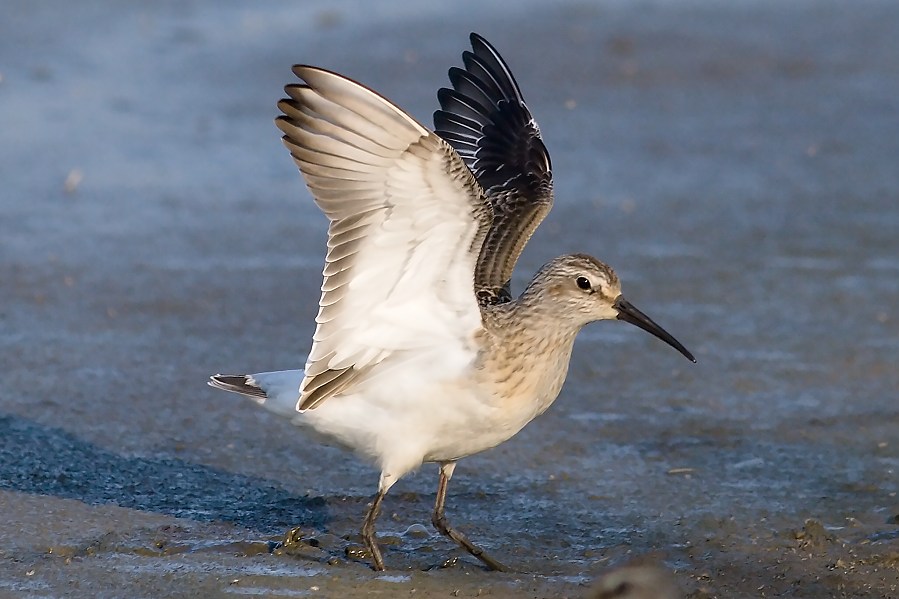
Calidris ferruginea · pobrežník krivozobý · Curlew Sandpiper
Alternative and historical names
Slovak names
- pobrežník krivozobý (Kovalik 2010)
- pobrežník krivozobý (Matoušek 1990)
English names
- Curlew Sandpiper (IOC 2.5 2010)
- Curlew-Sandpiper (BOU 1923)
Scientific names
- Calidris ferruginea (AviList 2026)
- Calidris ferruginea (IOC 15.2 2026)
- Calidris ferruginea (IOC 2.5 2010)
- Erolia ferruginea (BOU 1923)
Taxonomic synonyms
- Scolopax testacea (Pallas, 1764)
- Erolia ferruginea (Pontoppidan, 1763)
- Tringa ferrugineus (Pontoppidan, 1763)
- Tringa spec (Pontoppidan, 1763)
- Calidris ferruginea (Pontoppidan, 1763)
Birding Slovakia database
This species through our community’s eyes
Photographs by category
Species characteristics in Slovakia
- Migration
- rare transmigrant / Tr
- Rarities committee:
- Does not require any reporting or registration by Raritties commitee
Observation map

Detailed species observation statistics

Source: the Birding.sk database. Counts reflect observer contributions, not population size.
About this species
Distribution
Curlew Sandpiper breeds in the Siberian Arctic and winters along coasts in Africa, southern Asia and Australia. It passes regularly through Slovakia in variable, usually modest numbers. Spring birds occur mainly in May; return passage begins with adults in summer, followed later by juveniles. It is not a Slovak breeding species.
Habitat
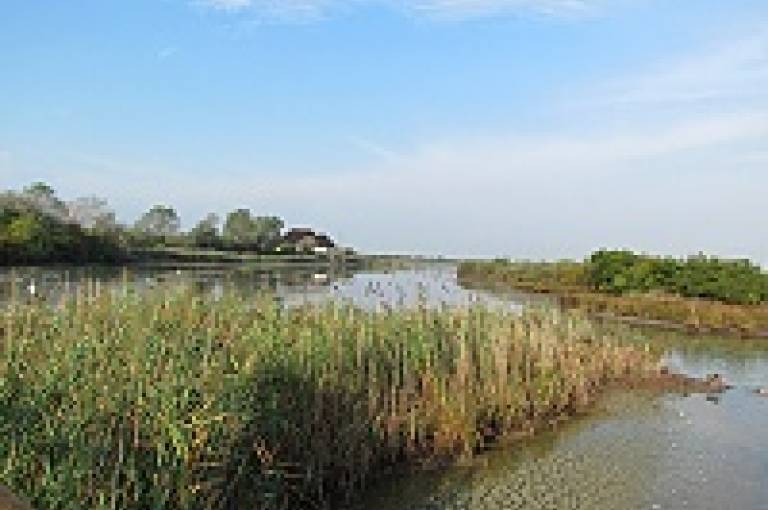
Breeding sites lie in wet Siberian tundra, while wintering birds mainly use coastal wetlands. Slovak stops include fishpond bottoms and muddy reservoir shallows. Longer legs and bill allow feeding in water among other sandpipers.
Breeding
Breeding takes place in Siberian tundra, where the female usually lays four eggs in a low-vegetation scrape. She incubates and leads chicks, while males may depart during incubation.
Food
Its longer curved bill seeks worms, small crustaceans and other invertebrates in wet sediment. Insects are also taken in the north; migrants can probe deeper than short-billed species.
Interesting fact
A rich rusty adult and a grey-brown juvenile can look like different species. Body structure and the gently downcurved bill are therefore more helpful than breast colour alone.
Sources: Slovak Wikipedia · English Wikipedia
Sign in to send private feedback on the text to our editors.
Explore further
Overview and identification
Descriptions, identification and names.
- Slovak Wikipedia ↗
Taxon account in Slovak: distribution, biology and references for further reading.
https://sk.wikipedia.org/wiki/Pobre%C5%BEn%C3%ADk_krivozob%C3%BD - English Wikipedia ↗
Taxon account in English: distribution, biology and taxonomic context.
https://en.wikipedia.org/wiki/Curlew_sandpiper - BTO: Identifying Sanderlings, Curlew Sandpipers and Dunlin ↗
English identification video comparing this taxon with similar species and explaining distinguishing features.
https://www.bto.org/learn/skills/bird-identification/videos/sanderling-curlew-sandpiper