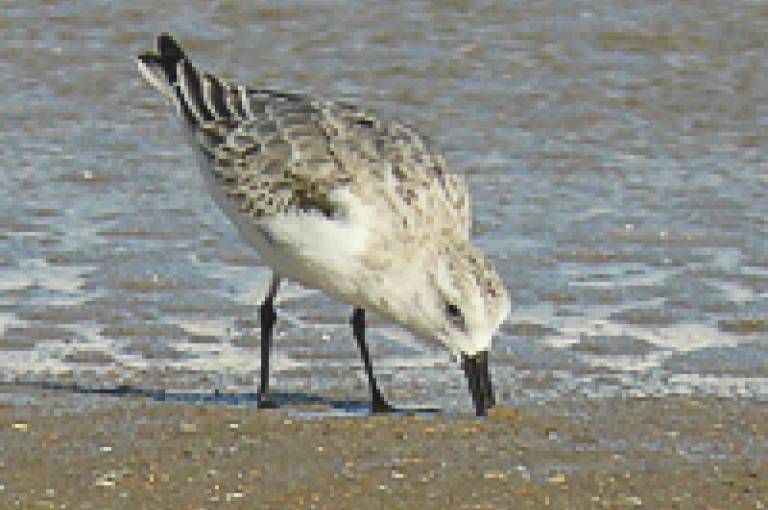
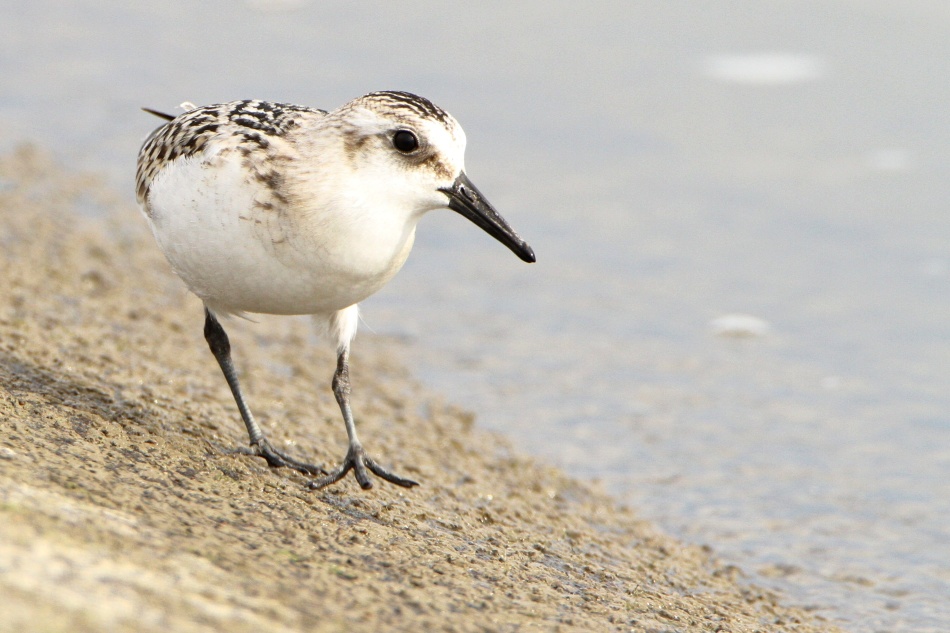
Calidris alba · pobrežník belavý · Sanderling
Alternative and historical names
Slovak names
- pobrežník belavý (Kovalik 2010)
- pieskarik belavý (Kovalik 2010)
- pieskárik biely (Kovalik 2010)
- pobrežník piesočný (Kovalik 2010)
- pobrežník belavý (Matoušek 1990)
English names
- Sanderling (IOC 2.5 2010)
- Sanderling (BOU 1923)
Scientific names
- Calidris alba (AviList 2026)
- Calidris alba (IOC 15.2 2026)
- Calidris alba (IOC 2.5 2010)
- Crocethia alba (BOU 1923)
Taxonomic synonyms
- Calidris arenaria (Illiger, 1811)
- Crocethia alba (Pallas, 1764)
- Tringa alba (Pallas, 1764)
- Calidris alba (Pallas, 1764)
Birding Slovakia database
This species through our community’s eyes
Photographs by category
Species characteristics in Slovakia
- Migration
- rare transmigrant / Tr
- Rarities committee:
- Sigthings of this specie are registered by Raritties commitee
Observation map

Detailed species observation statistics

Source: the Birding.sk database. Counts reflect observer contributions, not population size.
About this species
Distribution
Sanderling breeds in the far northern tundra and winters on coasts almost worldwide. Slovakia lies away from its main coastal habitat. Rare visitors stop on spring and autumn passage, particularly in May and from August to October. It does not breed here and is not a regular winter visitor.
Habitat
It breeds in dry stony Arctic tundra. Outside breeding it characteristically follows waves on sandy marine beaches. In Slovakia, sandy and muddy reservoir shores or exposed fishpond bottoms provide inland substitutes.
Breeding
On northern breeding grounds it usually lays four eggs in a shallow dry-tundra scrape. Care varies: a pair or one parent may tend a clutch. Chicks soon leave and find food nearby.
Food
On beaches it takes small crustaceans and other invertebrates from wet sand. In tundra and at inland stops it also eats insects, surface-picking or extracting prey with its short bill.
Interesting fact
On a beach it often runs after a receding wave and retreats before the next. It exploits the brief window when prey becomes accessible in wet sand, rather than merely running aimlessly away from water.
Sources: Slovak Wikipedia · English Wikipedia
Sign in to send private feedback on the text to our editors.
Explore further
Overview and identification
Descriptions, identification and names.
- Slovak Wikipedia ↗
Taxon account in Slovak: distribution, biology and references for further reading.
https://sk.wikipedia.org/wiki/Pobre%C5%BEn%C3%ADk_belav%C3%BD - English Wikipedia ↗
Taxon account in English: distribution, biology and taxonomic context.
https://en.wikipedia.org/wiki/Sanderling - BTO: Identifying Sanderlings, Curlew Sandpipers and Dunlin ↗
English identification video comparing this taxon with similar species and explaining distinguishing features.
https://www.bto.org/learn/skills/bird-identification/videos/sanderling-curlew-sandpiper