Microcarbo pygmaeus · kormorán malý · Pygmy Cormorant
Alternative and historical names
Slovak names
- kormorán malý (Kovalik 2010)
- kormorán čiernozobý (Kovalik 2010)
- kormorán malý (Matoušek 1990)
English names
- Pygmy Cormorant (IOC 2.5 2010)
Scientific names
- Microcarbo pygmaeus (AviList 2026)
- Microcarbo pygmaeus (IOC 15.2 2026)
- Microcarbo pygmeus (IOC 2.5 2010)
Taxonomic synonyms
- Halietor pygmeus (Collar & Andrew, 1988)
- ? pygmaeus (Pallas, 1773)
- Phalacrocorax pygmaeus (Pallas, 1773)
- Microcarbo pygmaeus (Pallas, 1773)

Birding Slovakia database
This species through our community’s eyes
Photographs by category
Species characteristics in Slovakia
- General occurrence
- migrant / M
- Breeding
- rare nidificant / Nr
- Wintering
- rare wintering / Wr
- Rarities committee:
- Does not require any reporting or registration by Raritties commitee
Conservation — Red Lists
- Slovakia 2023breeding population
- Breeding population Period: 2013–2023 Source: Demko M. a kol. 2025: Červený zoznam vtákov Slovenska: aktualizácia 2013 – 2023. Tichodroma 37: 107–117. Online 18. 1. 2026. DOI: 10.31577/tichodroma.2025.37.18. Výsledky, s. 112, výslovne menovaný druh Druh uvedený v texte medzi 19 druhmi NA.
Observation map
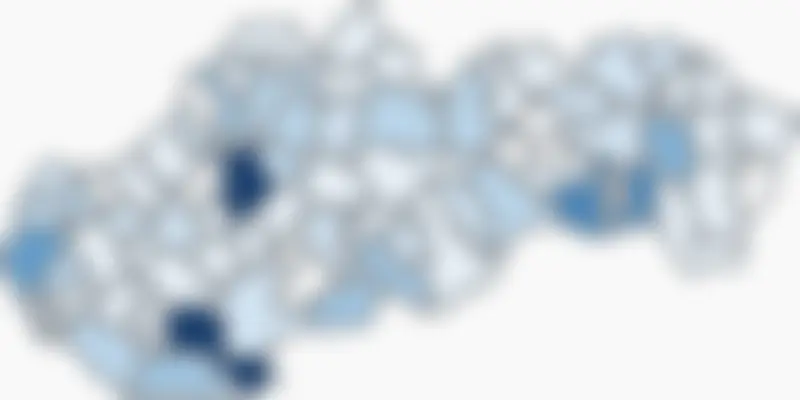
Detailed species observation statistics

Source: the Birding.sk database. Counts reflect observer contributions, not population size.
About this species
Distribution
Its stronghold is south-eastern Europe and south-western Asia. Slovakia lies near the north-western part of its expanding central European occurrence. It is a local breeder and also occurs outside the breeding season on suitable waters, especially in the south. On the Danube it can be regular and more numerous in winter, while remaining rare elsewhere.
Habitat
It favours shallow fishponds, river arms and wetlands with nearby bushes or trees. In Slovakia, also look on larger Danube water bodies. It rests on low branches, often in groups and sometimes alongside Great Cormorants.
Breeding
It nests colonially in trees, bushes or reeds, often among herons. Both parents share care of the brood. Older accounts describing it solely as an occasional Slovak breeder no longer reflect the situation at some eastern Slovak wetlands.
Food
It mainly catches small fish by diving, searching shallower waters and resting above the surface between feeding bouts.
Interesting fact
It is not a young Great Cormorant. Even an adult has a much smaller body, short bill and conspicuously long tail, making the differences easy to compare when the two species rest together.
Sources: Slovak Wikipedia · English Wikipedia · State Nature Conservancy: breeding season 2023 · LIFE Energia: Pygmy Cormorant
Sign in to send private feedback on the text to our editors.
Explore further
Overview and identification
Descriptions, identification and names.
- Slovak Wikipedia ↗
Taxon account in Slovak: distribution, biology and references for further reading.
https://sk.wikipedia.org/wiki/Kormor%C3%A1n_mal%C3%BD - English Wikipedia ↗
Taxon account in English: distribution, biology and taxonomic context.
https://en.wikipedia.org/wiki/Pygmy_cormorant - State Nature Conservancy: breeding season 2023 ↗
Report on waterbird breeding at Senné fishponds in 2023.
https://chkovihorlat.sopsr.sk/hniezdna-sezona-2023-na-senianskych-rybnikoch-zaujimave-pozorovania/ - LIFE Energia: Pygmy Cormorant ↗
Species account and wetland conservation in Slovakia.
https://www.lifeenergia.sk/projekt/druhy/item/432-kormoran-maly.html