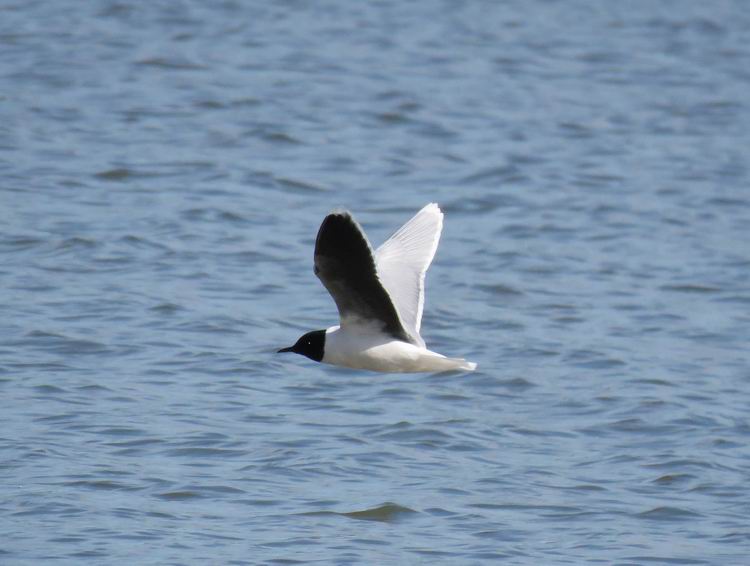
Hydrocoloeus minutus · čajka malá · Little Gull
Alternative and historical names
Slovak names
- čajka malá (Kovalik 2010)
- čajka malá (Matoušek 1990)
English names
- Little Gull (IOC 2.5 2010)
- Little Gull (BOU 1923)
Scientific names
- Hydrocoloeus minutus (AviList 2026)
- Hydrocoloeus minutus (IOC 15.2 2026)
- Hydrocoloeus minutus (IOC 2.5 2010)
- Larus minutus (BOU 1923)
Taxonomic synonyms
- Chroicocephalus minutus (Pallas, 1776)
- Larus minutus (Pallas, 1776)
- Hydrocoloeus minutus (Pallas, 1776)
Birding Slovakia database
This species through our community’s eyes
Photographs by category
Species characteristics in Slovakia
- Migration
- uncommon transmigrant / Tu
- Wintering
- rare wintering / Wr
- Rarities committee:
- Does not require any reporting or registration by Raritties commitee
Observation map

Detailed species observation statistics

Source: the Birding.sk database. Counts reflect observer contributions, not population size.
About this species
Distribution
It breeds mainly in northern and eastern Europe and Asia, with smaller colonies in North America, and winters chiefly on coasts and at sea. Small numbers migrate through Slovakia in spring and summer–autumn, often over large waters. It is not a regular Slovak breeder; isolated winter or summer birds should be distinguished from a local breeding population.
Habitat
Breeding habitats are shallow freshwater wetlands with aquatic vegetation. Migrants use reservoirs and fishponds, flying low and agilely in search of food. They may join terns and marsh terns, making careful examination of mixed flocks worthwhile.
Breeding
In the breeding range it builds a low nest near water or among aquatic plants. Both parents incubate and feed the chicks. Northern wetland breeding should not be confused with Slovak passage occurrence.
Food
It picks small invertebrates from the surface and catches airborne insects. At sea it also takes small aquatic animals near the surface.
Interesting fact
It is the world's smallest gull. Adults are recognisable by their dark underwings, while juveniles show a striking dark pattern across the upperwings.
Sources: Slovak Wikipedia · English Wikipedia
Sign in to send private feedback on the text to our editors.
Explore further
Overview and identification
Descriptions, identification and names.
- Slovak Wikipedia ↗
Taxon account in Slovak: distribution, biology and references for further reading.
https://sk.wikipedia.org/wiki/%C4%8Cajka_mal%C3%A1 - English Wikipedia ↗
Taxon account in English: distribution, biology and taxonomic context.
https://en.wikipedia.org/wiki/Little_gull - BTO: Identifying small black-headed gulls: Little, Mediterranean and Black-headed ↗
English identification video comparing this taxon with similar species and explaining distinguishing features.
https://www.bto.org/learn/skills/bird-identification/videos/small-black-headed-gulls - BTO: Identifying Kittiwakes and other small gulls ↗
English identification video comparing this taxon with similar species and explaining distinguishing features.
https://www.bto.org/learn/skills/bird-identification/videos/kittiwake-and-other-small-gulls