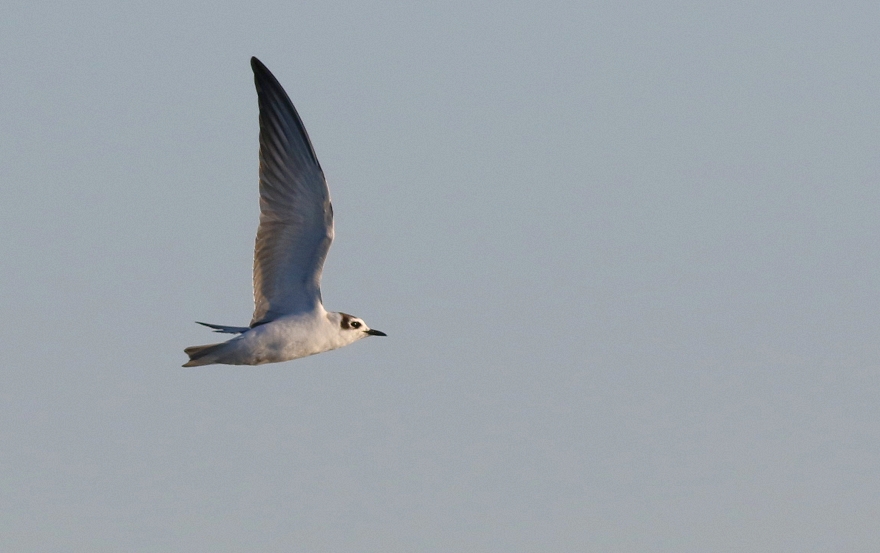
Chlidonias leucopterus · čorík bielokrídly · White-winged Tern
Alternative and historical names
Slovak names
- čorík bielokrídly (Kovalik 2010)
- rybár belokrídly (Kovalik 2010)
- rybár bielokrídly (Kovalik 2010)
- rybár bielokrídly (Matoušek 1990)
English names
- White-winged Tern (IOC 2.5 2010)
- White-winged Black Tern (BOU 1923)
Scientific names
- Chlidonias leucopterus (AviList 2026)
- Chlidonias leucopterus (IOC 15.2 2026)
- Chlidonias leucopterus (IOC 2.5 2010)
- Chlidonias leucopterus (BOU 1923)
Taxonomic synonyms
- Chilidonias leucopterus (Temminck, 1815)
- Hydrochelidon leucoptera (Temminck, 1815)
- Sterna leucoptera (Temminck, 1815)
- Chlidonias leucopterus (Temminck, 1815)
Birding Slovakia database
This species through our community’s eyes
Photographs by category
Species characteristics in Slovakia
- General occurrence
- migrant / M
- Breeding
- rare nidificant / Nr
- Migration
- rare transmigrant / Tr
- Rarities committee:
- Does not require any reporting or registration by Raritties commitee
Conservation — Red Lists
- Slovakia 2023breeding population
- Breeding population Period: 2013–2023 Source: Demko M. a kol. 2025: Červený zoznam vtákov Slovenska: aktualizácia 2013 – 2023. Tichodroma 37: 107–117. Online 18. 1. 2026. DOI: 10.31577/tichodroma.2025.37.18. Výsledky, s. 112, výslovne menovaný druh Druh uvedený v texte medzi 19 druhmi NA.
Observation map

Detailed species observation statistics

Source: the Birding.sk database. Counts reflect observer contributions, not population size.
About this species
Distribution
It breeds in wetlands from southeastern Europe across Asia to its eastern margins and winters in Africa, southern Asia and Australia. In Slovakia it is seen mainly during spring passage and the summer–autumn return. Breeding is rare and irregular, historically documented especially in the east; a large May arrival does not itself mean birds will stay to nest.
Habitat
It favours shallow freshwater marshes, flooded meadows and fishponds with aquatic vegetation. Migrants may also feed above open reservoirs. Temporary wetlands change quickly, and suitable feeding water may lack nesting substrates.
Breeding
A nest of fine stems lies on floating vegetation or close to water. Usually three eggs are laid, and both parents tend the offspring. Safe low vegetation and stable water levels matter throughout breeding.
Food
It picks aquatic insects and other small animals from the surface, also taking airborne insects and small fish. Light flight low above water is characteristic.
Interesting fact
Black-and-white breeding plumage with white wings is striking. Juveniles and non-breeding birds are much less contrasting and require separation from other marsh terns.
Sources: Slovak Wikipedia · English Wikipedia
Sign in to send private feedback on the text to our editors.
Explore further
Overview and identification
Descriptions, identification and names.
- Slovak Wikipedia ↗
Taxon account in Slovak: distribution, biology and references for further reading.
https://sk.wikipedia.org/wiki/%C4%8Cor%C3%ADk_bielokr%C3%ADdly - English Wikipedia ↗
Taxon account in English: distribution, biology and taxonomic context.
https://en.wikipedia.org/wiki/White-winged_tern