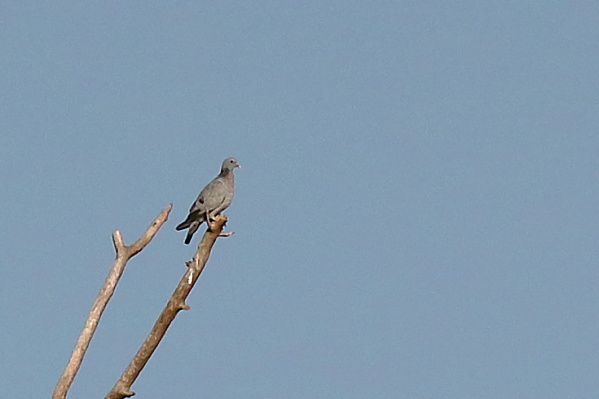
Columba oenas · holub plúžik · Stock Dove
Alternative and historical names
Slovak names
- holub plúžik (Kovalik 2010)
- holub plúžik (divý) (Kovalik 2010)
- holub plúžik (Matoušek 1990)
English names
- Stock Dove (IOC 2.5 2010)
- Stock-Dove (BOU 1923)
Scientific names
- Columba oenas (AviList 2026)
- Columba oenas (IOC 15.2 2026)
- Columba oenas (IOC 2.5 2010)
- Columba oenas (BOU 1923)
Taxonomic synonyms
- Columba oenas Linnaeus, 1758
Birding Slovakia database
This species through our community’s eyes
Species characteristics in Slovakia
- General occurrence
- migrant / M
- Breeding
- common nidificant / Nc
- Migration
- common transmigrant / Tc
- Wintering
- common wintering / Wc
- Rarities committee:
- Does not require any reporting or registration by Raritties commitee
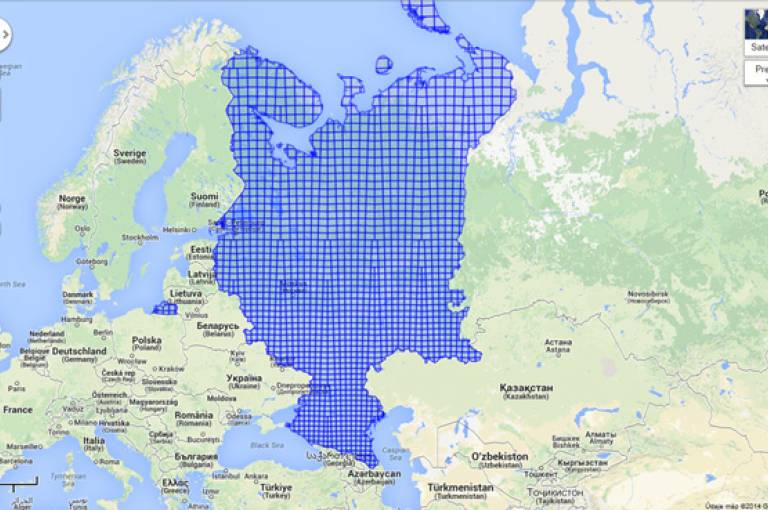
Observation map

Detailed species observation statistics

Source: the Birding.sk database. Counts reflect observer contributions, not population size.
About this species
Distribution
Stock Dove has a western Palearctic range from Europe to western Asia and northwestern Africa. In Slovakia it breeds in wooded landscapes, locally also in lowlands. Some birds move seasonally, with return beginning as early as late winter. Winter flocks also remain in lowland fields, often with other pigeons. It is distinct from feral domestic pigeons.
Habitat
Old trees with sufficiently large cavities and accessible open feeding ground are important. It uses deciduous and mixed forests, old parks and similar stands. Removing hollow trees reduces nesting opportunities even where food remains.
Breeding
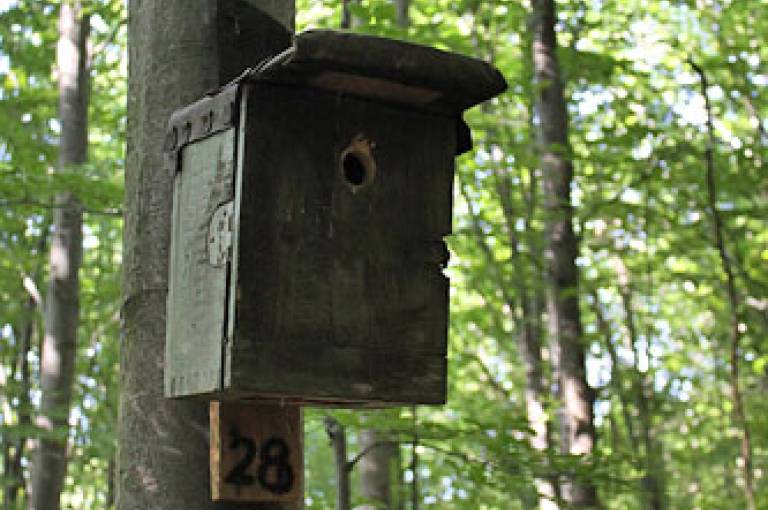
It nests mainly in tree cavities, sometimes excavated by Black Woodpecker, and also accepts nest boxes. Both parents incubate the usually two white eggs. Chicks remain in the cavity and receive food from their parents.
Food
It gathers mainly seeds, grain and green plant material from the ground, occasionally taking small invertebrates. Feeding requires accessible surfaces among vegetation.
Interesting fact
It lacks Wood Pigeon's white neck patch and wingbar and wild Rock Dove's conspicuous white rump. Comparing whole birds within a flock brings out these understated differences.
Sources: Slovak Wikipedia · English Wikipedia
Sign in to send private feedback on the text to our editors.
Explore further
Overview and identification
Descriptions, identification and names.
- Slovak Wikipedia ↗
Taxon account in Slovak: distribution, biology and references for further reading.
https://sk.wikipedia.org/wiki/Holub_pl%C3%BA%C5%BEik - English Wikipedia ↗
Taxon account in English: distribution, biology and taxonomic context.
https://en.wikipedia.org/wiki/Stock_dove - BTO: Identifying pigeons - Woodpigeons, Stock Doves, Rock Doves and Feral Pigeons ↗
English identification video comparing this taxon with similar species and explaining distinguishing features.
https://www.bto.org/learn/skills/bird-identification/videos/pigeons