Ardeola ralloides · čaplička vlasatá · Squacco Heron
Alternative and historical names
Slovak names
- čaplička vlasatá (Kovalik 2010)
- volavica vlasatá (Kovalik 2010)
- volavka vlasatá (Kovalik 2010)
- volavka vlasavá (Kovalik 2010)
- volavka vlasatá (Matoušek 1990)
English names
- Squacco Heron (IOC 2.5 2010)
- Squacco Heron (BOU 1923)
Scientific names
- Ardeola ralloides (AviList 2026)
- Ardeola ralloides (IOC 15.2 2026)
- Ardeola ralloides (IOC 2.5 2010)
- Ardeola ralloides (BOU 1923)
Taxonomic synonyms
- Ardea comata (Pallas, 1773)
- Ardea ralloides (Scopoli, 1769)
- Ardeola ralloides (Scopoli, 1769)
Birding Slovakia database
This species through our community’s eyes
Photographs by category
Species characteristics in Slovakia
- General occurrence
- migrant / M
- Breeding
- rare nidificant / Nr
- Migration
- rare transmigrant / Tr
- Rarities committee:
- Does not require any reporting or registration by Raritties commitee
Conservation — Red Lists
- Slovakia 2023breeding population
- Breeding population Period: 2013–2023 Source: Demko M. a kol. 2025: Červený zoznam vtákov Slovenska: aktualizácia 2013 – 2023. Tichodroma 37: 107–117. Online 18. 1. 2026. DOI: 10.31577/tichodroma.2025.37.18. Výsledky, s. 112, výslovne menovaný druh Druh uvedený v texte medzi 19 druhmi NA.
Observation map

Detailed species observation statistics

Source: the Birding.sk database. Counts reflect observer contributions, not population size.
About this species
Distribution
It occurs in southern Europe, parts of south-western Asia and Africa. European populations winter mainly in Africa. Slovakia lies near the northern edge of its more continuous central European occurrence. Here it is a very rare, irregular breeder and a scarce wetland visitor in the warmer months; wintering is unusual.
Habitat
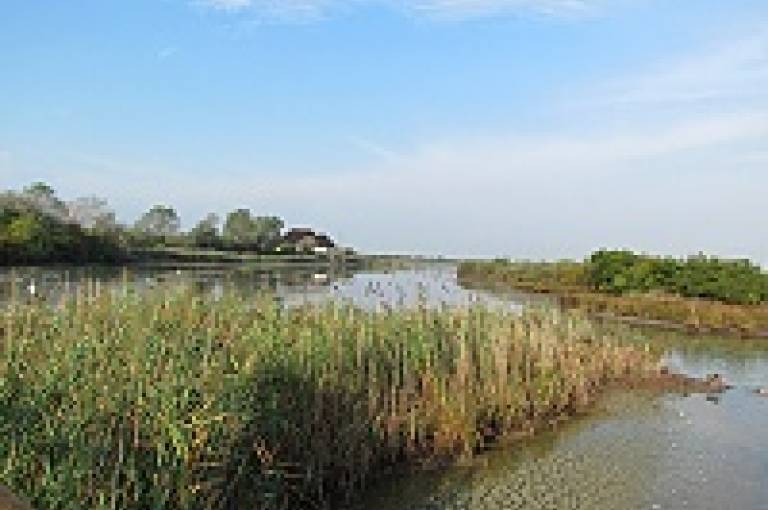
It favours shallow fishponds, overgrown river arms, wet meadows and reed edges, feeding unobtrusively beside banks or from floating vegetation. Rich lowland wetlands offer the best opportunities in Slovakia; deep open water without shallows provides little suitable feeding habitat.
Breeding
It builds its nest in bushes or trees, often in a mixed colony with other herons. Both partners care for the eggs and young. The summer presence of an adult alone does not establish successful breeding.
Food
It eats small fish, amphibians, insects and other aquatic invertebrates, catching prey with a rapid thrust of the bill.
Interesting fact
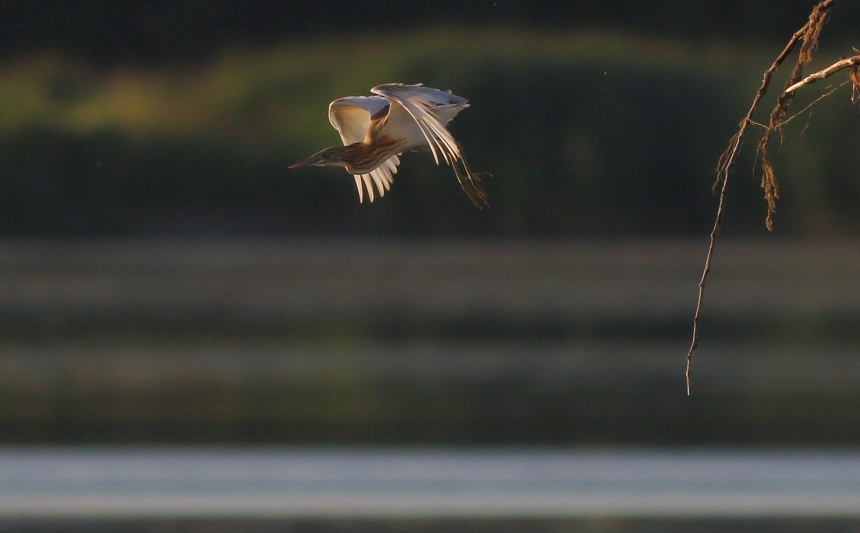
A resting Squacco Heron looks mostly brownish, yet on taking flight it suddenly reveals almost white wings and tail. This striking change in appearance is one of its most memorable identification features.
Sources: Slovak Wikipedia · English Wikipedia · BTO BirdFacts · State Nature Conservancy: breeding season 2023
Sign in to send private feedback on the text to our editors.
Explore further
Overview and identification
Descriptions, identification and names.
- Slovak Wikipedia ↗
Taxon account in Slovak: distribution, biology and references for further reading.
https://sk.wikipedia.org/wiki/%C4%8Capli%C4%8Dka_vlasat%C3%A1 - English Wikipedia ↗
Taxon account in English: distribution, biology and taxonomic context.
https://en.wikipedia.org/wiki/Squacco_heron - BTO BirdFacts ↗
Biology and identification in English; population figures and trends refer to Britain.
https://www.bto.org/learn/about-birds/birdfacts/squacco-heron - State Nature Conservancy: breeding season 2023 ↗
Report on waterbird breeding at Senné fishponds in 2023.
https://chkovihorlat.sopsr.sk/hniezdna-sezona-2023-na-senianskych-rybnikoch-zaujimave-pozorovania/