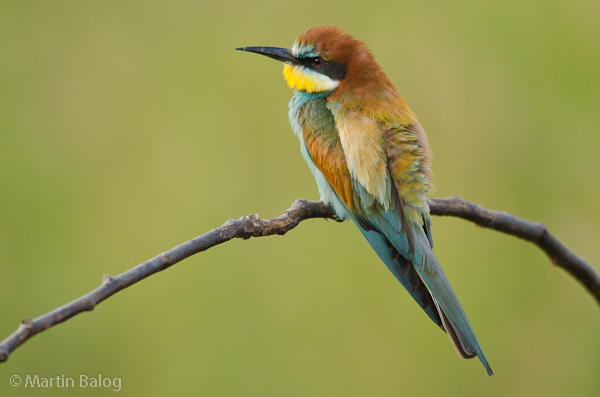
Merops apiaster · včelárik zlatý · European Bee-eater
Alternative and historical names
Slovak names
- včelárik zlatý (Kovalik 2010)
- včelárik európsky (Kovalik 2010)
- včelárik zlatý (Matoušek 1990)
English names
- European Bee-eater (IOC 2.5 2010)
- Bee-eater (BOU 1923)
Scientific names
- Merops apiaster (AviList 2026)
- Merops apiaster (IOC 15.2 2026)
- Merops apiaster (IOC 2.5 2010)
- Merops apiaster (BOU 1923)
Taxonomic synonyms
- Merops apiaster Linnaeus, 1758
Birding Slovakia database
This species through our community’s eyes
Species characteristics in Slovakia
- General occurrence
- migrant / M
- Breeding
- uncommon nidificant / Nu
- Migration
- common transmigrant / Tc
- Rarities committee:
- Does not require any reporting or registration by Raritties commitee
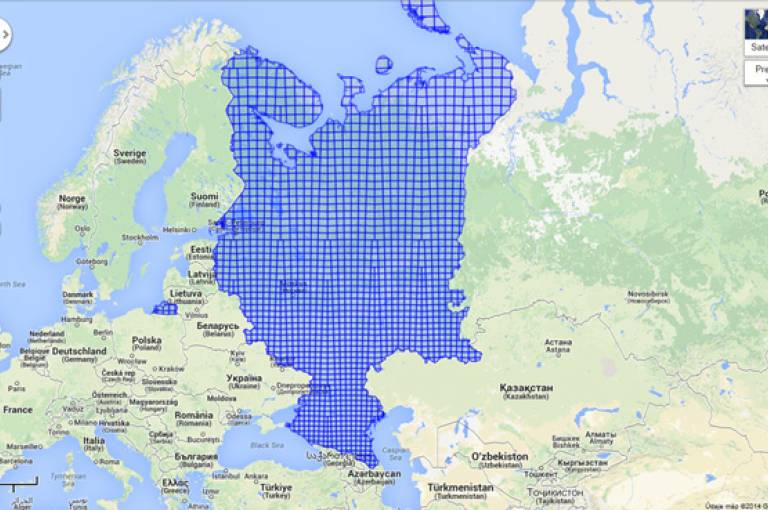
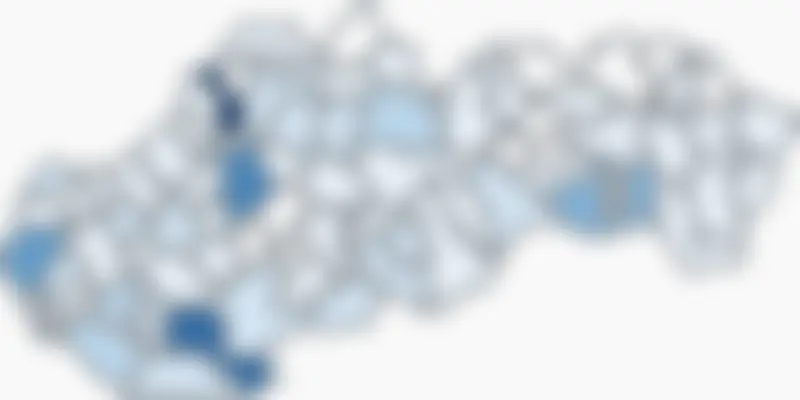
Observation map
Detailed species observation statistics

Source: the Birding.sk database. Counts reflect observer contributions, not population size.
About this species
Distribution
The European Bee-eater inhabits warm parts of Europe, North Africa and western to central Asia; European populations winter in sub-Saharan Africa. Slovakia lies in the northern part of its traditional European breeding range, rather than on a fixed boundary: breeding also occurs farther north. It breeds regularly here, mainly in warmer regions, and can be common around colonies. It arrives in May and leaves in late summer and early September.
Habitat
It favours open country with pastures, meadows, scattered trees and abundant flying insects. Nesting opportunities are provided by sandy or earthy faces, riverbanks, sandpits and road cuttings. Migrants may appear beyond the warm lowlands; a flock often reveals itself with soft, ringing calls.
Breeding
It usually nests in colonies. The pair excavates a tunnel ending in a chamber where the female lays several white eggs. Both parents share care and bring insects to the chicks. Nesting banks should be watched from a distance.
Food
It catches larger insects in flight, including bees, wasps, bumblebees, dragonflies and butterflies. The diet depends on local availability: it is not a hunter restricted to a single kind of prey.
Interesting fact
This colourful bird does not weave its nest among branches: both partners work as builders of an underground tunnel. The passage can exceed a metre in length and ends in a chamber hidden deep inside the bank.
Sources: Slovak Wikipedia · BTO BirdFacts · State Nature Conservancy: bee-eaters in Ponitrie · English Wikipedia
Sign in to send private feedback on the text to our editors.
Explore further
Overview and identification
Descriptions, identification and names.
- Slovak Wikipedia ↗
Taxon account in Slovak: distribution, biology and references for further reading.
https://sk.wikipedia.org/wiki/V%C4%8Del%C3%A1rik_zlat%C3%BD - BTO BirdFacts ↗
Biology and identification in English; population figures and trends refer to Britain.
https://www.bto.org/learn/about-birds/birdfacts/bee-eater - State Nature Conservancy: bee-eaters in Ponitrie ↗
A Slovak account of bee-eater habitat, breeding and seasonality.
https://chkoponitrie.sopsr.sk/operene-skvosty-odleteli/ - English Wikipedia ↗
Taxon account in English: distribution, biology and taxonomic context.
https://en.wikipedia.org/wiki/European_bee-eater