Erithacus rubecula · červienka obyčajná · European Robin
Alternative and historical names
Slovak names
- červienka obyčajná (Kovalik 2010)
- červienka krovinná (Kovalik 2010)
- slávik červienka (Kovalik 2010)
- slávik červienka (Matoušek 1990)
- červienka (Matoušek 1990)
English names
- European Robin (IOC 2.5 2010)
- Redbreast (BOU 1923)
Scientific names
- Erithacus rubecula (AviList 2026)
- Erithacus rubecula (IOC 15.2 2026)
- Erithacus rubecula (IOC 2.5 2010)
- Erithacus rubecula (BOU 1923)
Taxonomic synonyms
- Erithacus rubecula armoricanus (Lebeurier & Rapine, 1936)
- Erithacus dandalus sardus (Kleinschmidt, 1906)
- Erithacus rubecula sardus (Kleinschmidt, 1906)
- Motacilla rubecula (Linnaeus, 1758)
- Motacilla spec (Linnaeus, 1758)
- Erithacus rubecula (Linnaeus, 1758)

Birding Slovakia database
This species through our community’s eyes
Species characteristics in Slovakia
- General occurrence
- migrant / M
- Breeding
- common nidificant / Nc
- Migration
- common transmigrant / Tc
- Wintering
- uncommon wintering / Wu
- Rarities committee:
- Does not require any reporting or registration by Raritties commitee
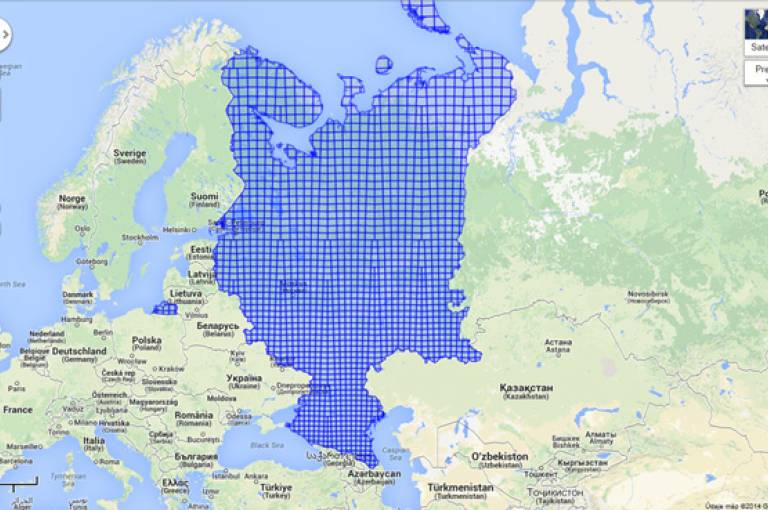
Observation map

Detailed species observation statistics

Source: the Birding.sk database. Counts reflect observer contributions, not population size.
About this species
Distribution
The Robin lives across much of Europe, extending into western Asia and north-west Africa. In Slovakia it is a common, widespread breeder from the lowlands to mountain forests. Migrants join local birds in spring and autumn. Many of our Robins leave for the winter, while a smaller proportion remains, especially in milder lowlands and basins.
Habitat
It favours woodland with undergrowth, scrubby edges, shaded gardens and parks. It often moves close to the ground or among fallen leaves. In winter it may also be found beside unfrozen streams and in gardens with dense bushes.
Breeding
It conceals its nest low down, for example beneath roots, in a ground cavity, a bank or a recess. The female lays several eggs and incubates them; the male helps feed the young. It may nest twice in a season. Newly fledged young initially stay in cover.
Food
It collects small insects, spiders and other invertebrates. In autumn and winter it also eats berries and soft fruits. It often finds prey by dropping briefly from a low perch to the ground.
Interesting fact
A Robin may seem confiding towards people, yet it can be strongly territorial towards another Robin. Individual birds defend feeding areas even in winter, so a peaceful garden scene can conceal rather fierce disputes between neighbours.
Sources: Slovak Wikipedia · BTO BirdFacts · English Wikipedia
Sign in to send private feedback on the text to our editors.
Explore further
Overview and identification
Descriptions, identification and names.
- Slovak Wikipedia ↗
Taxon account in Slovak: distribution, biology and references for further reading.
https://sk.wikipedia.org/wiki/%C4%8Cervienka_oby%C4%8Dajn%C3%A1 - BTO BirdFacts ↗
Biology and identification in English; population figures and trends refer to Britain.
https://www.bto.org/learn/about-birds/birdfacts/robin - English Wikipedia ↗
Taxon account in English: distribution, biology and taxonomic context.
https://en.wikipedia.org/wiki/European_robin
Sounds, photographs and video
Recordings and visual comparisons.
- BTO: identifying Nightingale and other night singers ↗
English comparative identification video covering appearance and vocalisations.
https://www.bto.org/learn/skills/bird-identification/videos/nightingale-and-other-night-singers