Acrocephalus palustris · trsteniarik obyčajný · Marsh Warbler
Alternative and historical names
Slovak names
- trsteniarik obyčajný (Kovalik 2010)
- trsteniarik bahenný (Kovalik 2010)
- trsteniarik spevavý (Kovalik 2010)
- trsteniarik spevavý (Matoušek 1990)
English names
- Marsh Warbler (IOC 2.5 2010)
- Marsh-Warbler (BOU 1923)
Scientific names
- Acrocephalus palustris (AviList 2026)
- Acrocephalus palustris (IOC 15.2 2026)
- Acrocephalus palustris (IOC 2.5 2010)
- Acrocephalus palustris (BOU 1923)
Taxonomic synonyms
- Motacilla palustris (Bechstein, 1798)
- Motacilla spec (Bechstein, 1798)
- Sylvia palustris (Bechstein, 1798)
- Acrocephalus palustris (Bechstein, 1798)

Birding Slovakia database
This species through our community’s eyes
Species characteristics in Slovakia
- General occurrence
- migrant / M
- Breeding
- common nidificant / Nc
- Migration
- common transmigrant / Tc
- Rarities committee:
- Does not require any reporting or registration by Raritties commitee
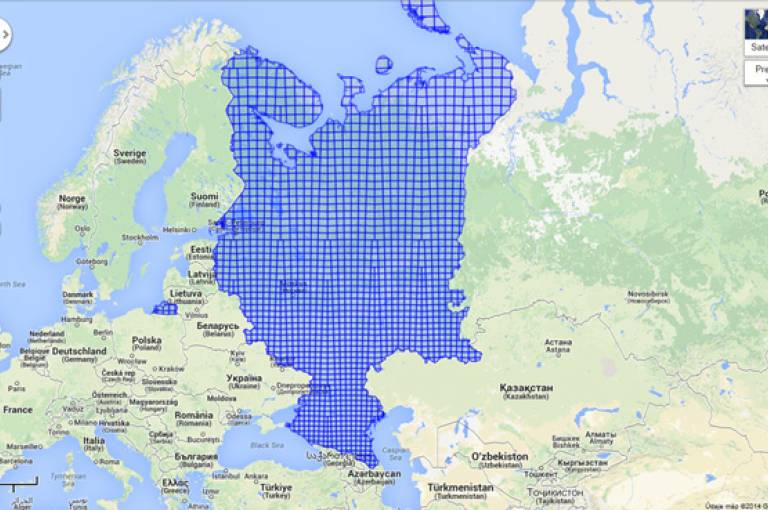
Observation map

Detailed species observation statistics

Source: the Birding.sk database. Counts reflect observer contributions, not population size.
About this species
Distribution
It breeds in temperate Europe and western Asia and winters mainly in southeastern Africa. In Slovakia it is a widespread breeder from lowlands into lower mountain areas. It arrives relatively late, mostly in May, and leaves from late summer. Its brief breeding-ground stay contrasts with the impression created by conspicuous singing during a few late-spring weeks.
Habitat
Typical habitats include tall herbs, nettles, damp ditches, field margins and waterside scrub. It need not nest in reeds or directly above water. Dense strong stems and plentiful nearby insects are more important.
Breeding
The deep cup nest is attached between herb stems. A typical clutch contains 4–5 eggs. Both parents incubate and feed the chicks, usually raising one brood during a relatively short breeding season.
Food
It collects insects and spiders from leaves and stems, occasionally catching airborne prey. Small snails and autumn berries may supplement the diet.
Interesting fact
It is an accomplished mimic, incorporating both European birds and sounds learned in Africa. One singer can create the impression that several very different species are calling from the same thicket.
Sources: Slovak Wikipedia · English Wikipedia · BTO BirdFacts
Sign in to send private feedback on the text to our editors.
Explore further
Overview and identification
Descriptions, identification and names.
- Slovak Wikipedia ↗
Taxon account in Slovak: distribution, biology and references for further reading.
https://sk.wikipedia.org/wiki/Trsteniarik_oby%C4%8Dajn%C3%BD - English Wikipedia ↗
Taxon account in English: distribution, biology and taxonomic context.
https://en.wikipedia.org/wiki/Marsh_warbler - BTO BirdFacts ↗
Biology and identification in English; population figures and trends refer to Britain.
https://www.bto.org/learn/about-birds/birdfacts/marsh-warbler
Data and research
Occurrences, distribution and research.
- RBBP: Marsh Warbler monitoring and identification ↗
English survey method distinguishing Marsh from Reed Warbler by song.
https://www.rbbp.org.uk/wp-content/uploads/2020/10/Marsh-warbler-Gilbert-et-al.pdf