Cyanistes caeruleus · sýkorka belasá · Eurasian Blue Tit
Alternative and historical names
Slovak names
- sýkorka belasá (Kovalik 2010)
- sýkorka belasá (Matoušek 1990)
English names
- Eurasian Blue Tit (IOC 2.5 2010)
- Blue Titmouse (BOU 1923)
Scientific names
- Cyanistes caeruleus (AviList 2026)
- Cyanistes caeruleus (IOC 15.2 2026)
- Cyanistes caeruleus (IOC 2.5 2010)
- Parus caeruleus (BOU 1923)
Taxonomic synonyms
- Parus caeruleus touraudericus (Bacmeister & Kleinschmidt, 1920)
- Parus caeruleus (Linnaeus, 1758)
- Cyanistes caeruleus (Linnaeus, 1758)

Birding Slovakia database
This species through our community’s eyes
Species characteristics in Slovakia
- General occurrence
- mainly resident, minority is migratory / R(M)
- Breeding
- common nidificant / Nc
- Migration
- common transmigrant / Tc
- Wintering
- common wintering / Wc
- Rarities committee:
- Does not require any reporting or registration by Raritties commitee
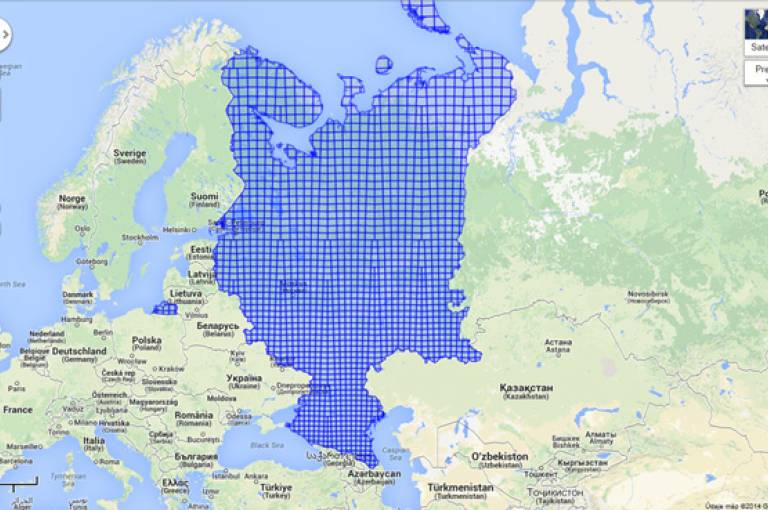
Observation map

Detailed species observation statistics

Source: the Birding.sk database. Counts reflect observer contributions, not population size.
About this species
Distribution
It is widespread across much of Europe and adjacent western Asia. In Slovakia it is one of the commonest breeding tits and occurs year-round. Local birds remain or wander short distances, while some populations also migrate. Winter visits to gardens and feeders do not confine it to human settlements.
Habitat
It favours deciduous and mixed woods, especially oak and floodplain forests, also orchards, parks and gardens with older trees. Fine branches and leaf undersides are searched. Cavities and varied insect-rich vegetation are important when feeding chicks.
Breeding
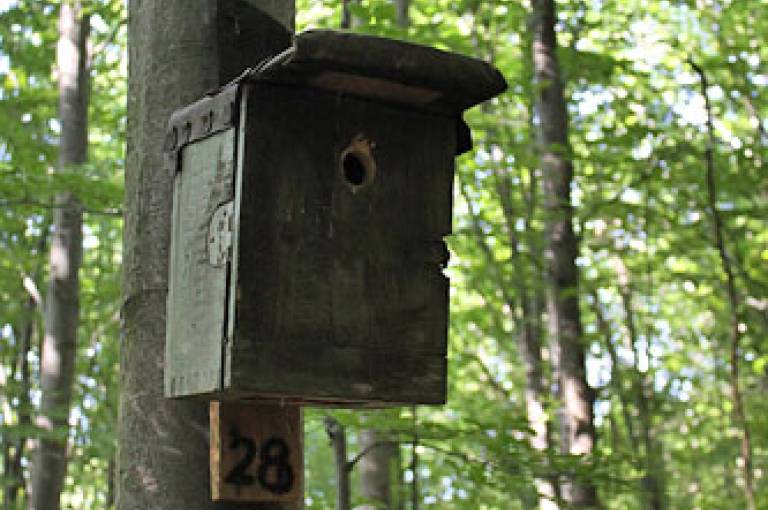
It nests in tree holes and readily accepts suitable boxes, lining them with moss, hair and soft material. A typical clutch contains 8–12 eggs. The female incubates and both parents feed the young. One or additional breeding attempts occur according to conditions.
Food
Caterpillars and other soft insects are important for chicks. Seeds and other plant foods increase in autumn and winter, though invertebrates remain part of the diet.
Interesting fact
Its light, agile body allows upside-down feeding on slender outer twigs. Juveniles have yellowish cheeks and a less distinct blue cap, so they need not resemble miniature brightly coloured adults.
Sources: Slovak Wikipedia · English Wikipedia · BTO BirdFacts
Sign in to send private feedback on the text to our editors.
Explore further
Overview and identification
Descriptions, identification and names.
- Slovak Wikipedia ↗
Taxon account in Slovak: distribution, biology and references for further reading.
https://sk.wikipedia.org/wiki/S%C3%BDkorka_belas%C3%A1 - English Wikipedia ↗
Taxon account in English: distribution, biology and taxonomic context.
https://en.wikipedia.org/wiki/Eurasian_blue_tit - BTO BirdFacts ↗
Biology and identification in English; population figures and trends refer to Britain.
https://www.bto.org/learn/about-birds/birdfacts/blue-tit - Bird.watching: Eurasian Blue Tit – identification and voice ↗
Slovak species lesson with identification features and an example vocalisation.
https://bird.watching.sk/sk/sykorka-belasa-cyanistes-caeruleus/