Certhia familiaris · kôrovník dlhoprstý · Eurasian Treecreeper
Alternative and historical names
Slovak names
- kôrovník dlhoprstý (Kovalik 2010)
- kôrovník dlhoprstý (Matoušek 1990)
English names
- Eurasian Treecreeper (IOC 2.5 2010)
- Tree-Creeper (BOU 1923)
Scientific names
- Certhia familiaris (AviList 2026)
- Certhia familiaris (IOC 15.2 2026)
- Certhia familiaris (IOC 2.5 2010)
- Certhia familiaris (BOU 1923)
Taxonomic synonyms
- Certhia familiaris gerbei (Jouard, 1930)
- Certhia familiaris pyrenaica (Ingram, 1913)
- Certhia familiaris rhenana (Kleinschmidt, 1900)
- Certhia familiaris costa (Bailly, 1847)
- Certhia familiaris Linnaeus, 1758

Birding Slovakia database
This species through our community’s eyes
Photographs by category
Species characteristics in Slovakia
- General occurrence
- resident / R
- Breeding
- common nidificant / Nc
- Wintering
- common wintering / Wc
- Rarities committee:
- Does not require any reporting or registration by Raritties commitee
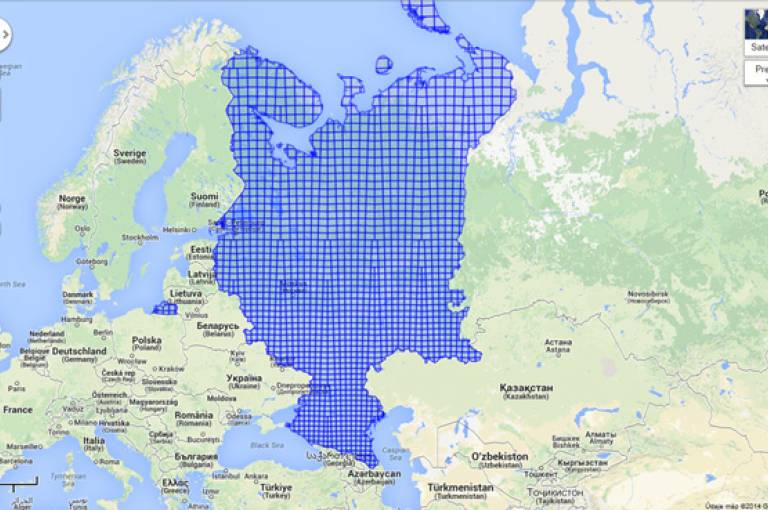
Observation map

Detailed species observation statistics

Source: the Birding.sk database. Counts reflect observer contributions, not population size.
About this species
Distribution
It is widespread in European and Asian forests. In Slovakia it is a regular resident breeder, especially in coniferous and mixed woodland from lower elevations to mountains. Most birds remain or wander locally, while northern populations can move farther. In winter it often accompanies tits and kinglets but chiefly searches trunks and larger branches itself.
Habitat
It favours older trees with textured bark, coniferous and mixed woods, some deciduous forests and parks. The patterned upperparts blend with trunks. Small upward hops and a thin high call are useful detection clues.
Breeding
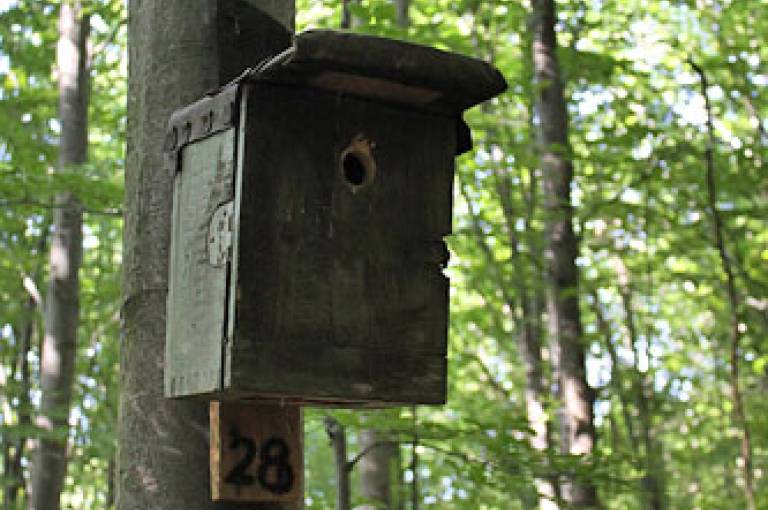
The nest is hidden behind loose bark or in a narrow crevice, with a base of plant material and fine twigs and a soft lining. The female usually lays 5–7 eggs and incubates; both parents feed the chicks. Some pairs breed again.
Food
Its slender curved bill extracts insects, spiders and their immature stages from bark crevices. Feeding is chiefly on trunks and branches rather than at seed feeders.
Interesting fact
It climbs, often spirally, then flies to the bottom of another tree. Song is the easiest distinction from Short-toed Treecreeper; toe length is seldom visible during ordinary watching.
Sources: Slovak Wikipedia · English Wikipedia · BTO BirdFacts
Sign in to send private feedback on the text to our editors.
Explore further
Overview and identification
Descriptions, identification and names.
- Slovak Wikipedia ↗
Taxon account in Slovak: distribution, biology and references for further reading.
https://sk.wikipedia.org/wiki/K%C3%B4rovn%C3%ADk_dlhoprst%C3%BD - English Wikipedia ↗
Taxon account in English: distribution, biology and taxonomic context.
https://en.wikipedia.org/wiki/Eurasian_treecreeper - BTO BirdFacts ↗
Biology and identification in English; population figures and trends refer to Britain.
https://www.bto.org/learn/about-birds/birdfacts/treecreeper - Bird.watching: Eurasian Treecreeper – identification and voice ↗
Slovak species lesson with identification features and an example vocalisation.
https://bird.watching.sk/sk/korovnik-dlhoprsty-certhia-familiaris/