Coccothraustes coccothraustes · glezg obyčajný · Hawfinch
Alternative and historical names
Slovak names
- glezg obyčajný (Kovalik 2010)
- glezg hrubozobý (Kovalik 2010)
- glezg hrubozobý (Matoušek 1990)
- glezg obyčajný (Ferianc 1958)
English names
- Hawfinch (IOC 2.5 2010)
- Hawfinch (BOU 1923)
Scientific names
- Coccothraustes coccothraustes (AviList 2026)
- Coccothraustes coccothraustes (IOC 15.2 2026)
- Coccothraustes coccothraustes (IOC 2.5 2010)
- Coccothraustes coccothraustes (BOU 1923)
Taxonomic synonyms
- Coccothraustes coccothraustes insularis (Salvadori & Festa, 1914)
- Loxia coccothraustes (Linnaeus, 1758)
- Coccothraustes coccothraustes (Linnaeus, 1758)
Birding Slovakia database
This species through our community’s eyes
Species characteristics in Slovakia
- General occurrence
- migrant / M
- Breeding
- common nidificant / Nc
- Migration
- common transmigrant / Tc
- Wintering
- common wintering / Wc
- Rarities committee:
- Does not require any reporting or registration by Raritties commitee
Observation map
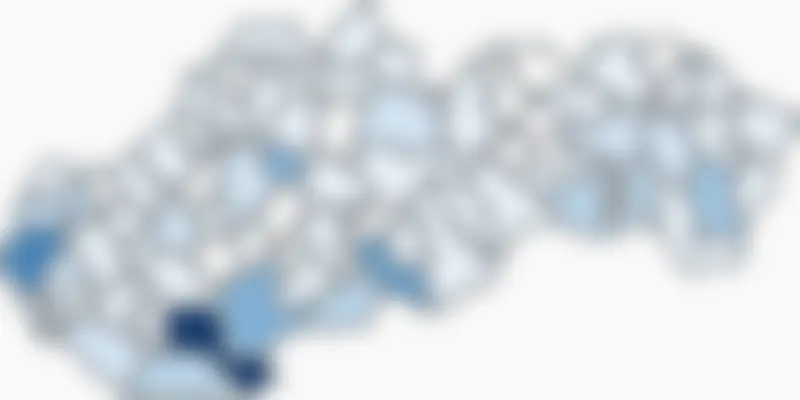
Detailed species observation statistics

Source: the Birding.sk database. Counts reflect observer contributions, not population size.
About this species
Distribution
The Hawfinch occupies a broad belt of Europe and temperate Asia, also occurring in north-western Africa. In Slovakia it is a widespread breeder, especially in broadleaved woods and lower elevations. It is seen year-round, although some local birds leave and northern populations arrive. Winter flocks move in response to seed crops.
Habitat
Oak-hornbeam and other deciduous woods, old parks, orchards and woodland edges are particularly suitable. It often stays high in the canopy, revealed by a sharp metallic call. In winter it can also be watched beneath trees or at feeders.
Breeding
A nest of twigs with a fine lining is placed in a tree, often near the trunk. Usually 4–5 eggs are laid in spring. The parents care for chicks, which remain together for a time after fledging.
Food
It eats tree seeds, fruit stones and buds. The powerful bill can crack hard cherry stones; insects supplement the diet.
Interesting fact
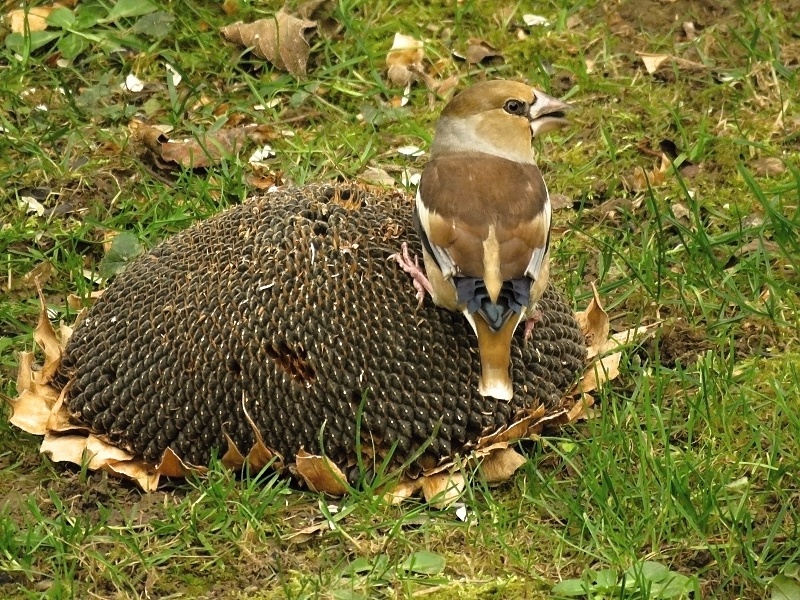
The massive head is more than an identification feature: it houses powerful muscles operating the bill. These allow access to seeds protected by shells that many other small birds cannot open.
Sources: Slovak Wikipedia · English Wikipedia · BTO BirdFacts
Sign in to send private feedback on the text to our editors.
Explore further
Overview and identification
Descriptions, identification and names.
- Slovak Wikipedia ↗
Taxon account in Slovak: distribution, biology and references for further reading.
https://sk.wikipedia.org/wiki/Glezg_oby%C4%8Dajn%C3%BD - English Wikipedia ↗
Taxon account in English: distribution, biology and taxonomic context.
https://en.wikipedia.org/wiki/Hawfinch - BTO BirdFacts ↗
Biology and identification in English; population figures and trends refer to Britain.
https://www.bto.org/learn/about-birds/birdfacts/hawfinch