Luscinia svecica cyanecula · slávik modrák · Bluethroat
Alternative and historical names
Slovak names
- modrák obyčajný (Kovalik 2010)
English names
No records yet.
Scientific names
- Luscinia svecica cyanecula (AviList 2026)
- Luscinia svecica cyanecula (IOC 15.2 2026)
Taxonomic synonyms
- ? cyanecula (Meisner, 1804)
- Cyanecula svecica cyanecula (Meisner, 1804)
- Erithacus svecicus cyaneculus (Meisner, 1804)
- Luscinia svecica cyanecula (Meisner, 1804)

Birding Slovakia database
This species through our community’s eyes
Photographs by category
Species characteristics in Slovakia
- General occurrence
- migrant / M
- Breeding
- rare nidificant / Nr
- Migration
- uncommon transmigrant / Tu
- Rarities committee:
- Does not require any reporting or registration by Raritties commitee
Observation map

Detailed species observation statistics

Source: the Birding.sk database. Counts reflect observer contributions, not population size.
About this species
Distribution
The white-spotted subspecies of Bluethroat occupies mainly central and western Europe and neighbouring regions. The species as a whole ranges across the Palearctic. In Slovakia it breeds locally in lowland wetlands and passes through in spring and late summer. It is migratory; regular winter presence is not typical here. Mountain breeding sites of the red-spotted subspecies represent a different ecological setting.
Habitat
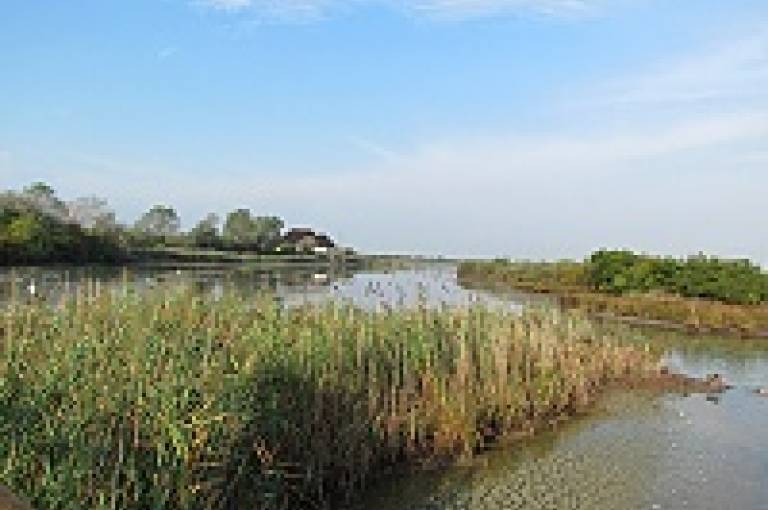
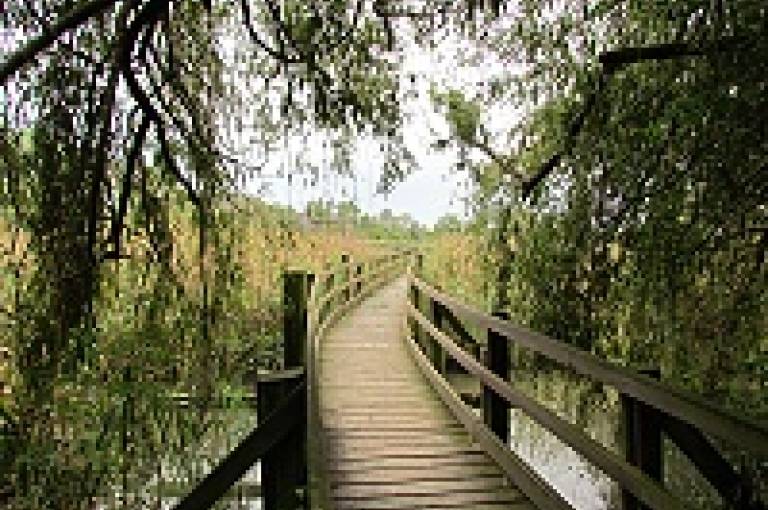
It seeks a mosaic of reeds, reedmace, low willows and exposed damp mud. Fishpond margins, overgrown wetlands and some artificial waters provide suitable habitat. Spring song from the top of a stem or bush often reveals it; otherwise it moves secretively close to the ground.
Breeding
The nest is concealed on or just above the ground in dense vegetation. The female usually lays 5–7 eggs. Both parents bring food to the chicks; drainage and removal of cover can degrade the breeding habitat.
Food
Its food consists of insects, spiders and other small invertebrates collected on mud and in vegetation. Small fruits are added seasonally.
Interesting fact
A male has a white central spot in its blue throat, although its size varies. When disturbed, the rusty tail base can be more conspicuous, exposed as the bird raises and spreads its tail.
Sources: Slovak Wikipedia · BTO BirdFacts
Sign in to send private feedback on the text to our editors.
Explore further
Overview and identification
Descriptions, identification and names.
- Slovak Wikipedia ↗
Taxon account in Slovak: distribution, biology and references for further reading.
https://sk.wikipedia.org/wiki/Sl%C3%A1vik_modr%C3%A1k - BTO BirdFacts ↗
Biology and identification in English; population figures and trends refer to Britain.
https://www.bto.org/learn/about-birds/birdfacts/bluethroat
Data and research
Occurrences, distribution and research.
- Naturalis: identifying Bluethroat and subspecies ↗
English identification account explicitly comparing svecica and cyanecula.
https://birds-europe.linnaeus.naturalis.nl/linnaeus_ng/app/views/species/taxon.php?id=130851 - ŠOP SR: Bluethroat – morphology and ecology ↗
Slovak state nature-conservation atlas with species morphology and ecology. Source uses a broader or older taxonomic scope.
https://www.biomonitoring.sk/Registration/AtlasAnimal/Detail/48775