Buteo buteo vulpinus · myšiak líščí · Common Buzzard [Steppe group]
Alternative and historical names
Slovak names
- myšiak lesný (Kovalik 2010)
- myšiak obyčajný (Kovalik 2010)
English names
No records yet.
Scientific names
- Buteo buteo vulpinus (AviList 2026)
- Buteo buteo vulpinus (IOC 15.2 2026)
Taxonomic synonyms
- Falco vulpinus (Gloger, 1833)
- Buteo buteo vulpinus (Gloger, 1833)
No photograph yet
Birding Slovakia database
This species through our community’s eyes
Species characteristics in Slovakia
- Migration
- rare transmigrant / Tr
- Rarities committee:
- Sighting of this specie should be reporter to Raritties Commitee
Observation map

Detailed species observation statistics

Source: the Birding.sk database. Counts reflect observer contributions, not population size.
About this species
Distribution
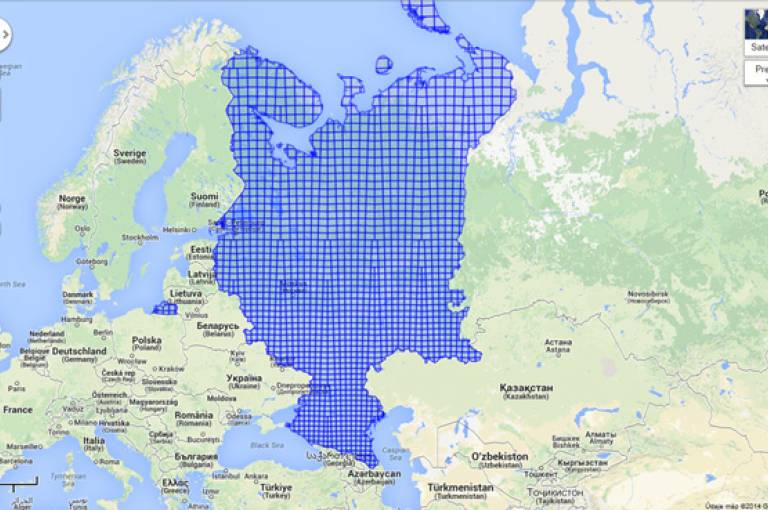
The Steppe Buzzard is the Common Buzzard subspecies Buteo buteo vulpinus, breeding from north-eastern Europe to central Asia. Unlike many local buzzards, it is strongly migratory and winters mainly in eastern and southern Africa. In Slovakia it is a rare passage migrant. A rusty buzzard in winter is not automatically vulpinus, and occasional observations do not represent a separate breeding population.
Habitat
Within its breeding range it uses woodland and edges alongside open hunting country. Migrants occur over fields, grassland and hills, using thermals. Resting birds may perch on trees, poles or other raised lookouts.
Breeding
Its nesting biology resembles that of nominate Common Buzzard. A stick nest is placed in a tree, usually holding 2–3 eggs. The parents supply prey to the young; these details describe nesting in its home range.
Food
It hunts small mammals, reptiles, insects and other available prey, occasionally taking carrion. Diet varies with season and region.
Interesting fact
It often looks smaller and relatively longer-winged, with rusty tones including the tail. Pale, dark and intermediate birds occur, however, so colour without proportions and pattern is insufficient.
Sources: BTO BirdFacts · English Wikipedia
Sign in to send private feedback on the text to our editors.
Explore further
Overview and identification
Descriptions, identification and names.
- BTO BirdFacts ↗
Biology and identification in English; population figures and trends refer to Britain.
https://www.bto.org/learn/about-birds/birdfacts/buzzard - English Wikipedia ↗
Taxon account in English: distribution, biology and taxonomic context.
https://en.wikipedia.org/wiki/Common_buzzard