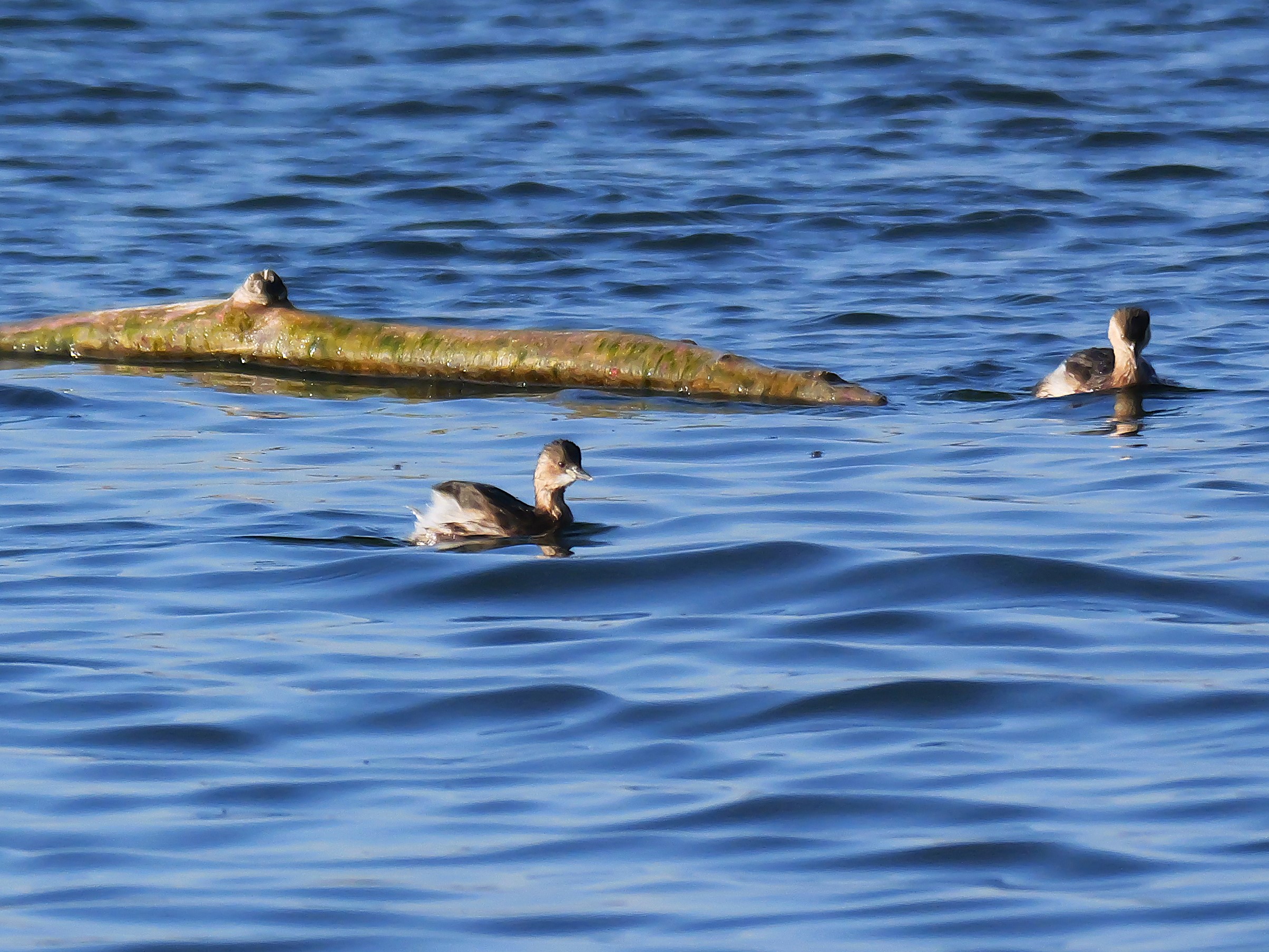
Tachybaptus ruficollis · potápka malá · Little Grebe
Alternative and historical names
Slovak names
- potápka hnedá (Kovalik 2010)
- potápka malá (Kovalik 2010)
- potápka hnedá (Matoušek 1990)
English names
- Little Grebe (IOC 2.5 2010)
- Little Grebe (BOU 1923)
Scientific names
- Tachybaptus ruficollis (AviList 2026)
- Tachybaptus ruficollis (IOC 15.2 2026)
- Tachybaptus ruficollis (IOC 2.5 2010)
- Podiceps ruficollis (BOU 1923)
Taxonomic synonyms
- Colymbus ruficollis (Pallas, 1764)
- Podiceps ruficollis (Pallas, 1764)
- Tachybaptus ruficollis (Pallas, 1764)
Birding Slovakia database
This species through our community’s eyes
Species characteristics in Slovakia
- General occurrence
- migrant / M
- Breeding
- common nidificant / Nc
- Migration
- common transmigrant / Tc
- Wintering
- uncommon wintering / Wu
- Rarities committee:
- Does not require any reporting or registration by Raritties commitee
Observation map

Detailed species observation statistics

Source: the Birding.sk database. Counts reflect observer contributions, not population size.
About this species
Distribution
It occurs across much of Europe, Africa and Asia. In Slovakia it is a common, though often inconspicuous, breeder in suitable wetlands. Some birds migrate, while others move to ice-free waters, so the species can be seen throughout the year. In winter it becomes concentrated at fewer sites.
Habitat
It favours small ponds, overgrown river arms, wetlands and quiet bays with dense aquatic vegetation. In winter, also check rivers and more open reservoirs. Its voice often reveals more than a brief glimpse of a bird slipping between plants.
Breeding
It builds a floating nest of plant material anchored in vegetation and may raise more than one brood in a season. The chicks swim early and are fed by their parents; when resting they may shelter on an adult's back.
Food
It eats mainly aquatic insects, their larvae and other small invertebrates. Small fish are also taken and can become more important in winter.
Interesting fact
It is Europe's smallest grebe, but its voice is anything but tiny. Its loud, accelerating trill can reveal an occupied pond before a bird ever appears on open water.
Sources: Slovak Wikipedia · English Wikipedia · BTO BirdFacts
Sign in to send private feedback on the text to our editors.
Explore further
Overview and identification
Descriptions, identification and names.
- Slovak Wikipedia ↗
Taxon account in Slovak: distribution, biology and references for further reading.
https://sk.wikipedia.org/wiki/Pot%C3%A1pka_mal%C3%A1 - English Wikipedia ↗
Taxon account in English: distribution, biology and taxonomic context.
https://en.wikipedia.org/wiki/Little_grebe - BTO BirdFacts ↗
Biology and identification in English; population figures and trends refer to Britain.
https://www.bto.org/learn/about-birds/birdfacts/little-grebe - BTO: Identifying small breeding grebes ↗
English identification video comparing this taxon with similar species and explaining distinguishing features.
https://www.bto.org/learn/skills/bird-identification/videos/small-breeding-grebes